

- 名古屋德川園女兒節冬日散策:流雛儀式與冬牡丹風景 - 2026-04-13
- 朝聖名古屋德川美術館《尾張德川家的雛祭》:御三家雛人形與大名家生活的微型世界 - 2026-04-06
- 猴硐貓村輕旅行:貓咪,是煤礦時代留下的生活痕跡 - 2026-04-04
澄
如果你需要中文版,可以在這裡找到,歡迎點擊閱讀。
I planned to visit five different markets during this trip to Tokyo, and among them, the Zoshigaya Handmade Market was the only one fully dedicated to handmade crafts. Unlike the antique or secondhand markets I usually visit, nearly every stall here featured original artisan works.
My most memorable experience was years ago at Kamigamo Shrine in Kyoto, where I first fell in love with Japanese craftsmanship. The pieces weren’t just beautifully made; you could feel the unique message each creator wanted to share. It felt less like shopping and more like visiting a small, moving exhibition. While prices were higher, the superior materials and thoughtful designs made every penny worth it.
While planning my route, I discovered that Zoshigaya Cemetery—the resting place of artist Yumeji Takehisa—was nearby. This felt like a profound coincidence. I had just come from his hometown in Okayama, where I visited his dedicated museum. I never expected to bridge the gap between his birthplace and his final resting place in a single trip.
Having previously strolled through a cemetery in Tainan, I felt no hesitation visiting one in Japan. Instead, it was a meaningful moment of closure, as if I had unknowingly completed a journey from Yumeji’s beginning to his end.
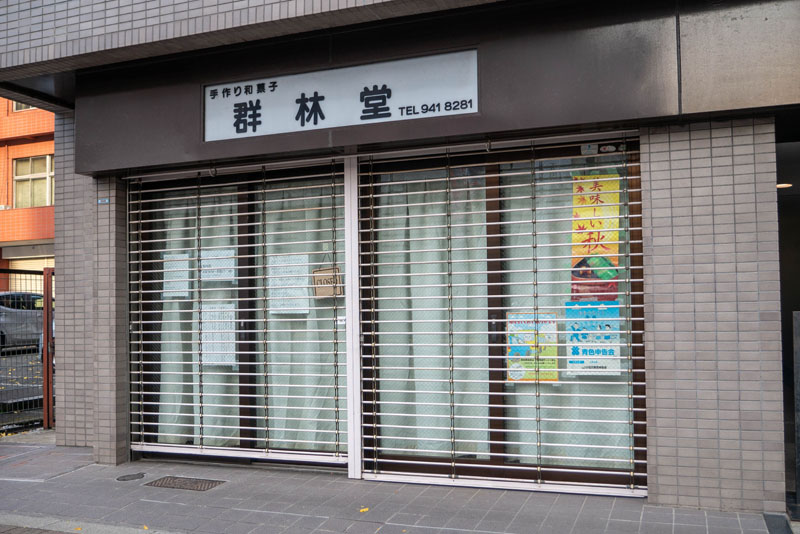
The day took an unexpected turn when I found Gunrindō, the famous wagashi shop, closed due to a family emergency. Watching disappointed locals leave empty-handed made me reflect on the fragile state of traditional Japanese sweets.
Wagashi making is incredibly labor-intensive, yet prices remain suppressed. During a short-term course I took at the Tokyo College of Confectionery, a teacher mentioned that wagashi chefs often earn less than Western pastry chefs, despite the complexity of their craft.
Today, Western sweets dominate the market. Even at major department stores like Daimaru, the Western sections are packed while legendary wagashi brands like Toraya struggle for attention. It is a difficult cycle: without better margins and interest from younger generations, these traditional crafts face a precarious future.
- Temple Markets and Ginkgo Trees: Stepping Into the Timeless Scene of Kishimojin Temple
- Quiet Moments at Daikokudo: Tasting the Limited Osendango by Habutae Dango
- Past Markets and Tram Tracks: A Quiet Visit to Yumeji’s Resting Place in Zoshigaya
- Reflection – On a Ginkgo-Filled Afternoon, I Found the Warmth of Life in Zoshigaya
Temple Markets and Ginkgo Trees: Stepping Into the Timeless Scene of Kishimojin Temple
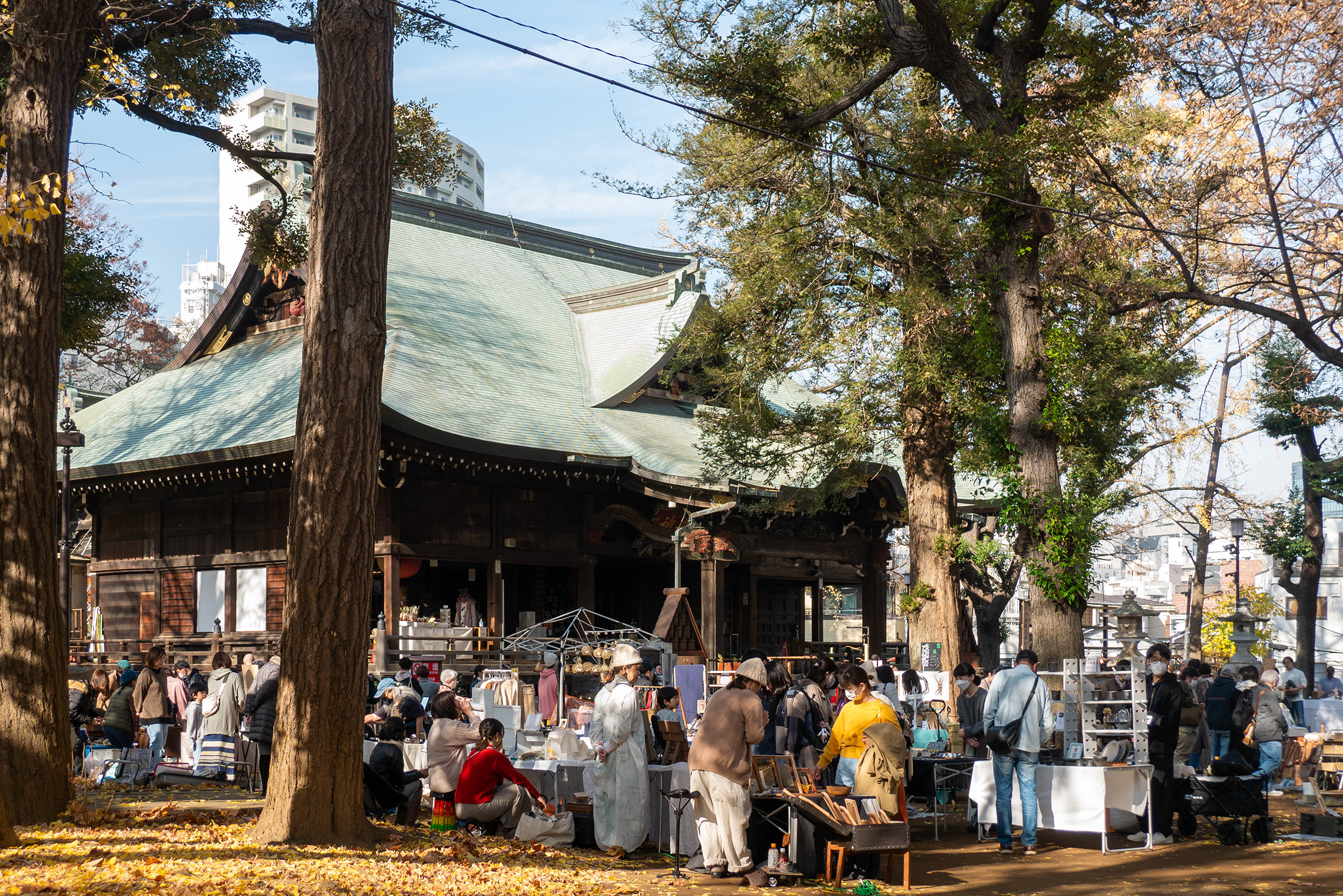
The Zoshigaya Handmade Market is primarily held within the grounds of Kishimojin Temple, with stalls extending to the nearby Otori Shrine. Built during the Edo period’s Genroku era, the temple is a designated Tangible Cultural Property that enshrines the goddess Kishimojin; once a demon, she transformed into a guardian of mothers and children after being moved by the Buddha’s teachings. On the day of my visit, the sight of numerous families praying for their children’s well-being added a warm, spiritual layer to the bustling market atmosphere.
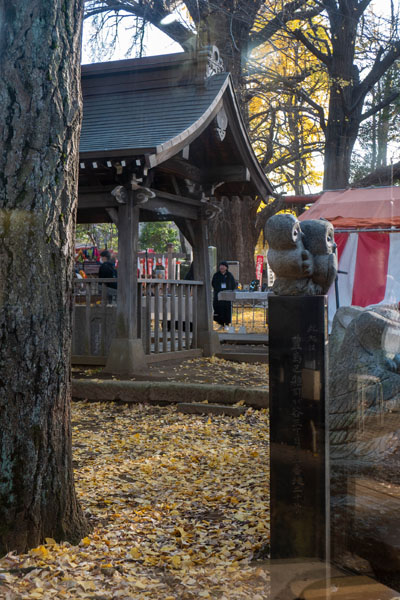
The temple grounds also house a historically significant ginkgo tree, planted during the Muromachi period. Older than the temple itself, this “Natural Monument” is famous for its golden autumn foliage. Although I missed the peak colors, the fallen leaves created a beautiful backdrop.
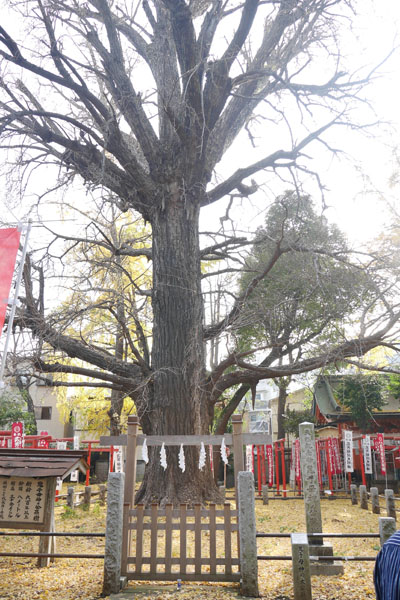
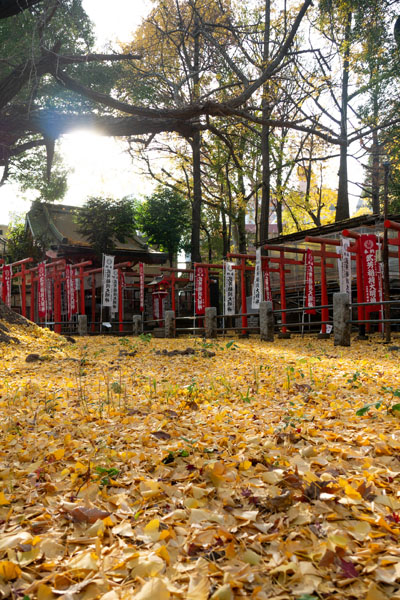
I also had a sensory surprise: a strong, decaying smell near the temple. I later realized it was my first encounter with the notorious odor of crushed ginkgo fruit—a distinct, if pungent, memory of my Tokyo trip.
Though Otori Shrine now stands independently due to the Meiji-era separation of Shinto and Buddhism, it shares deep historical ties with Kishimojin Temple. The handmade market physically spans both locations, subtly reflecting a spiritual bond that dates back centuries. Today, that connection is sustained not just through rituals, but through creativity and community interaction.
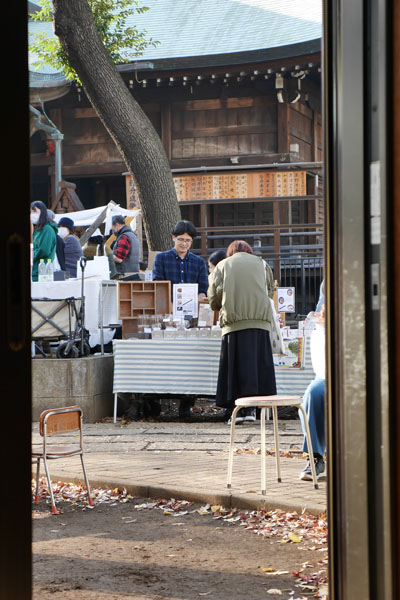
Since 2006, the market has maintained a strict “One maker, One item” policy. Only original creators may exhibit; reselling and mass-produced goods are strictly prohibited. With over 100 artisans and 200 stalls, the event is impressively diverse. Yet, generous spacing between booths ensures that visitors can enjoy each work at a comfortable pace without feeling overwhelmed by crowds.
The organizers also host themed events, such as the “Winter Pottery Market” at Otori Shrine or the upcoming “#Minazuki_no_Accessory” in May 2025. There are even playful themes like “#Useless_tezukuriichi” (Useless Handmade Market) planned for year-end.
To cope with Tokyo’s intense heat, the market adapts its schedule, such as moving indoors in August or announcing weather-related updates by 7 a.m. on the event day. This thoughtful responsiveness makes the Zoshigaya Handmade Market feel not just like a creative space, but a warmly human one.
Event Information
- Location:The market takes place within the grounds of Kishimojin-do Temple (3-15-20 Zoshigaya, Toshima-ku, Tokyo), and also extends to the nearby Otori Shrine (3-20-14 Zoshigaya).
- Schedule:Held on the third Sunday of every month, from 10:00 AM to 4:00 PM.
In case of unstable weather, the latest update will be announced on Twitter (X) or the official website by 7:00 AM on the event day. - Access:
- Tokyo Metro Fukutoshin Line – About 5-minute walk from Zoshigaya Station
- Toden Arakawa Line (Tokyo Sakura Tram) – About 2-minute walk from Kishibojinmae Station
- JR Ikebukuro Station (East Exit) – About 15-minute walk
- Official Website:tezukuriichi.com/home.html
- Official Twitter (X):x.com/kishimojinotori/
Quiet Moments at Daikokudo: Tasting the Limited Osendango by Habutae Dango
On-site, in addition to the many handmade craft stalls, there were several vendors selling light snacks arranged in a thoughtful layout. Stalls that didn’t use open flames—such as small bakeries or cold food makers—were clustered around the main hall of Kishimojin Temple, while those requiring fire or resembling traditional street vendors lined the main approach path. This clear division made it easy for visitors to navigate between shopping and eating, yet I later noticed that the official event map had completely omitted these food stalls. It felt as though the organizers had poured all their focus into highlighting the artisan creators, almost to the point of making the food vendors invisible.
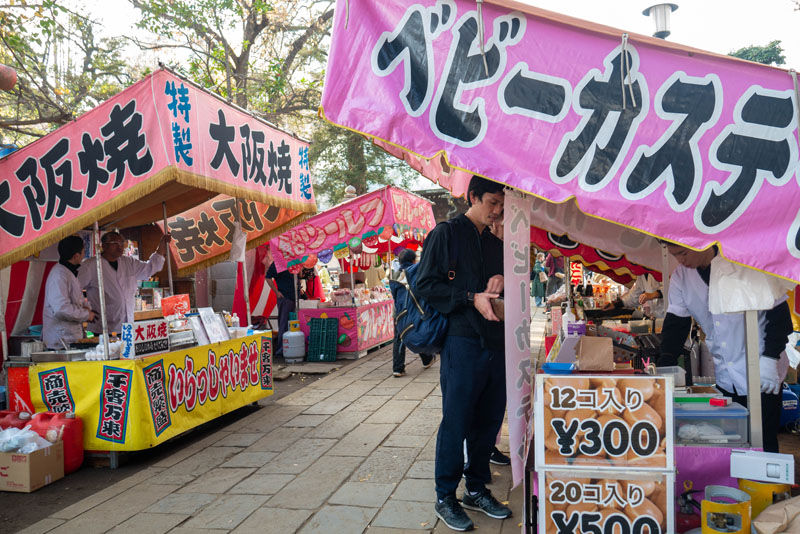
That day, the entire approach to the temple was lined with bustling stalls, creating a vibrant atmosphere that was exciting but also ended up obscuring the view of an important historical gem: Kamikawaguchiya. Founded in 1781, it is the oldest dagashi-ya (traditional penny candy shop) in the Zoshigaya neighborhood, and its current wooden building dates back to the Meiji era. Having miraculously survived major events like the Great Kanto Earthquake and the Tokyo air raids, the shop is seen by many locals as being under the divine protection of Kishimojin herself. Today, the shop is lovingly run by the 13th-generation obaa-chan, who continues to offer old-school Japanese snacks that evoke strong memories for locals and tourists alike.
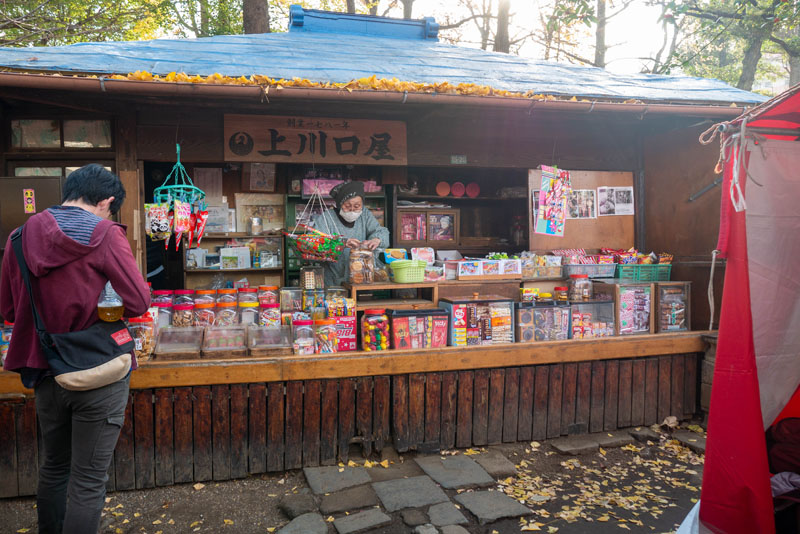
Interestingly, its charming exterior served as one of the visual references for Miyazaki’s promotional artwork for Studio Ghibli, making it a hidden pilgrimage spot for anime fans.。
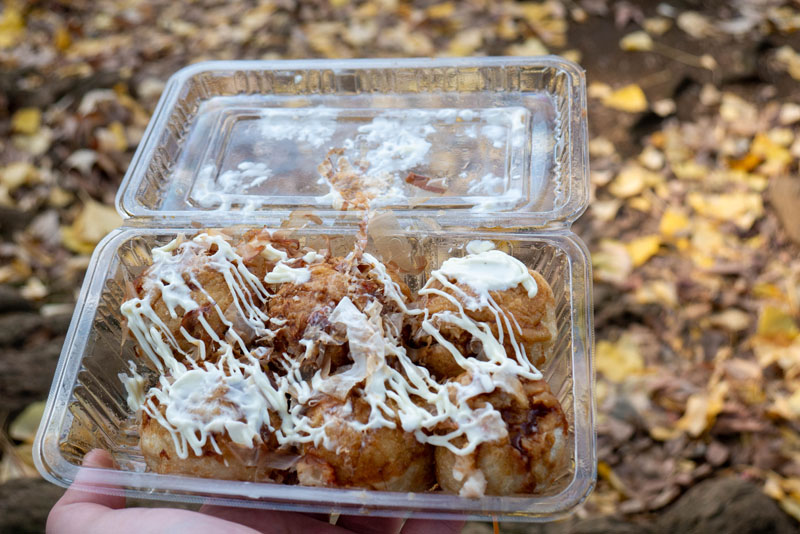
Back to the market—though I wasn’t particularly hungry, I couldn’t resist the massive takoyaki the moment I saw the stall. Luckily, there were plenty of benches within the temple grounds, many adorned with owl sculptures, where I could sit and eat at my own pace. As is common with Japanese takoyaki, the outside was soft and moist rather than crispy, but I personally didn’t mind and returned the empty container to the stall for proper disposal afterward.
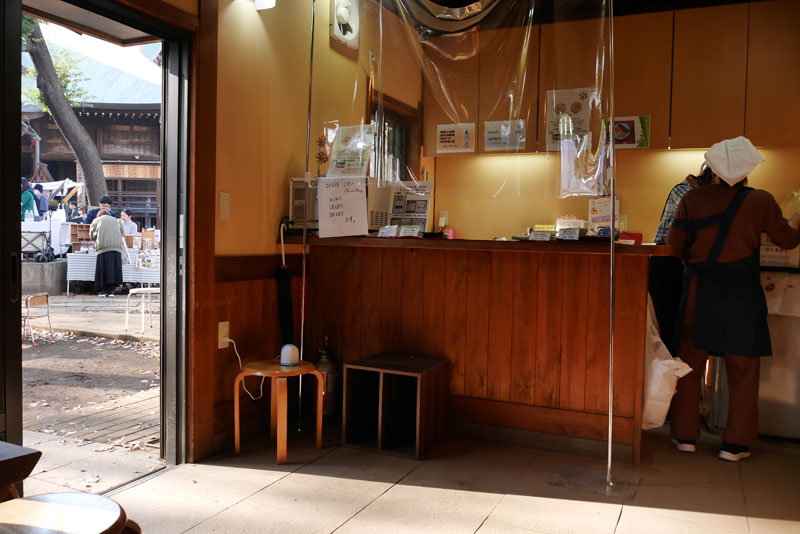
While taking a break near Daikokudo Hall, I stumbled upon a delightful surprise in a shop selling traditional wagashi from Habutae Dango, a legendary Tokyo confectionery founded in 1819. The highlight was a limited-edition treat called Osendango, which is exclusively available on weekends, holidays, and deity-related festival days known as ennichi, occurring on the 8th, 18th, and 28th of each month.
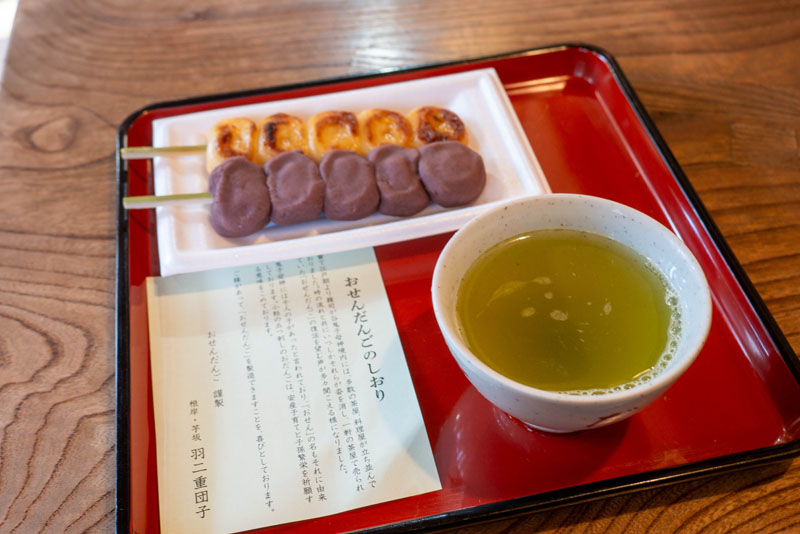
At Habutae’s main store, Osendango comes as a set of four balls on a skewer, but here at Daikokudo Hall, they are served in sets of five to symbolize Kishimojin’s blessings for safe childbirth and the flourishing of future generations. The set includes two skewers—one savory soy-sauce-glazed and one sweet red bean—served with a cup of hot sencha tea. The staff also handed out a small note explaining that this style of grilled dango dates back to the late Edo period. Roasted over charcoal and paired with their traditional recipes, the treat aims to let every visitor taste both the history of Edo and the essence of the changing seasons.
Seating was limited, so I quickly grabbed a spot once I saw one open up. As I slowly enjoyed the warm sweets and tea, I looked out at the crowds passing through the bustling market. The path was blanketed in golden ginkgo leaves, and owls carved from wood peeked out from corners of the temple grounds. That quiet moment—surrounded by gentle signs of nature and culture—perfectly balanced the market’s excitement with a sense of peace, making it hard to get up and leave.
Daikokudo (Within Kishimojin Temple Grounds)
- Address:Kishimojin Temple Grounds, 3-15-20 Zoshigaya, Toshima-ku, Tokyo, Japan
- Business Hours:11:00 AM – 4:30 PM (Ends earlier if sold out)
- Opening Days:
- Every Saturday, Sunday, and national holiday
- Also open on the 8th, 18th, and 28th of each month
- Access:About a 5-minute walk from Zoshigaya Station (Tokyo Metro Fukutoshin Line)
Habutae Dango (Main Store)
- Signature Item:Osendango (Grilled Rice Dumplings)
- Address:5-54-3 Higashi-Nippori, Arakawa-ku, Tokyo, Japan
- Access:About a 3-minute walk from Nippori Station (South Exit) on the JR Yamanote Line
- Founded:Bunsei 2 (1819), with over 200 years of history
- Official Website::habutae.jp/
Past Markets and Tram Tracks: A Quiet Visit to Yumeji’s Resting Place in Zoshigaya
After browsing the market at Ōtori Shrine, I followed the streetcar tracks and made my way down a quiet alley toward Zōshigaya Cemetery. The grounds were much larger than I had expected, spanning nearly ten hectares with clearly laid-out paths and sections visible even on Google Maps. Although I initially planned to enter through the main gate to avoid getting lost, I eventually decided to take a nearby side alley to save time.
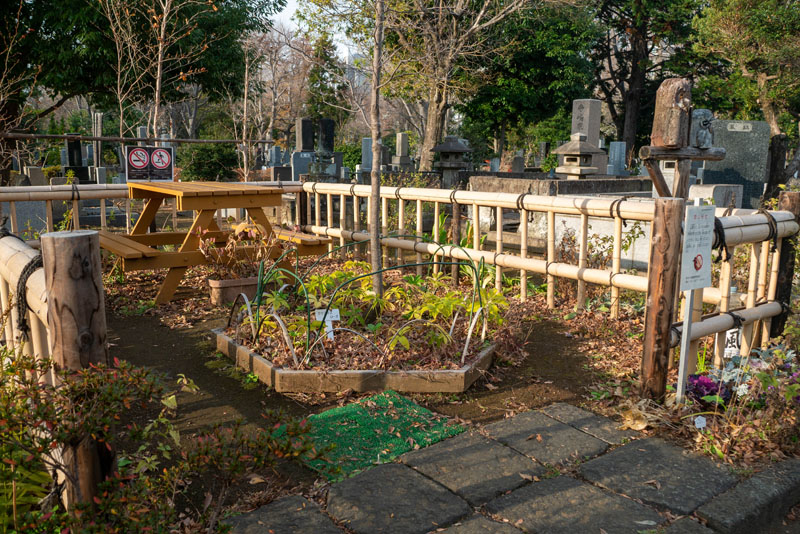
Walking through the cemetery felt completely different from what I had imagined. Instead of an eerie atmosphere, the space was bright and open, filled with tombstones ranging from traditional Japanese pillars to more modern, creative designs. It felt more like a quiet park where local residents and students cut through as part of their daily routine, revealing a space deeply woven into the fabric of neighborhood life.
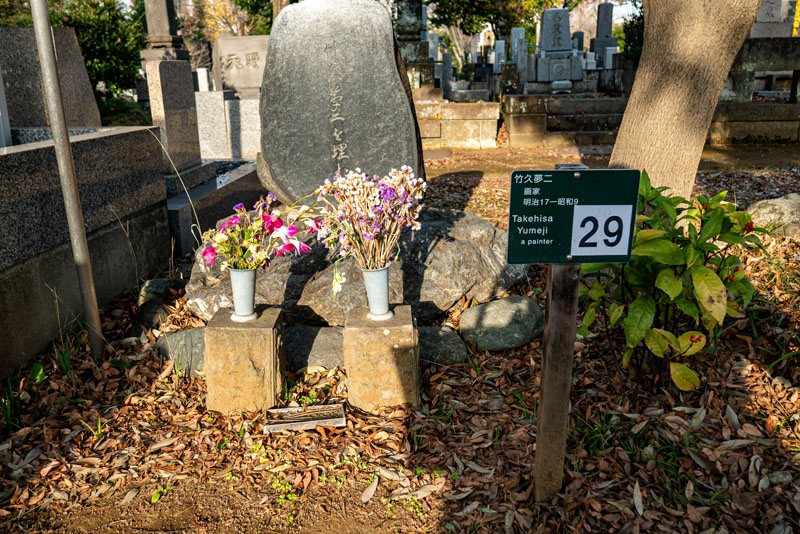
Finding the grave of Takehisa Yumeji was surprisingly easy due to the clear bilingual signs and maps marking the resting places of notable figures. His grave, a simple natural stone inscribed with “Takehisa Yumeji no haka,” was clearly labeled as No. 29. Fresh flowers sat in front, perhaps placed by fans or maintained by staff , alongside a detailed signboard set up by the Toshima City Board of Education.
This marker meticulously traces Yumeji’s life and artistic trajectory—from his birth in Okayama and his rise to fame in the late Meiji period, to his diverse creative legacy spanning poetry, design, and painting. The descriptions capture the timeless charm of an artist who defined an era, ensuring that even those unfamiliar with Yumeji can walk away with a profound understanding of his contribution to Japanese art.These informational signs are invaluable in a place like this, as it is also the resting place of legends like Natsume Sōseki, Nagai Kafū, and Lafcadio Hearn; without them, one might easily pass by these significant figures without realizing it.
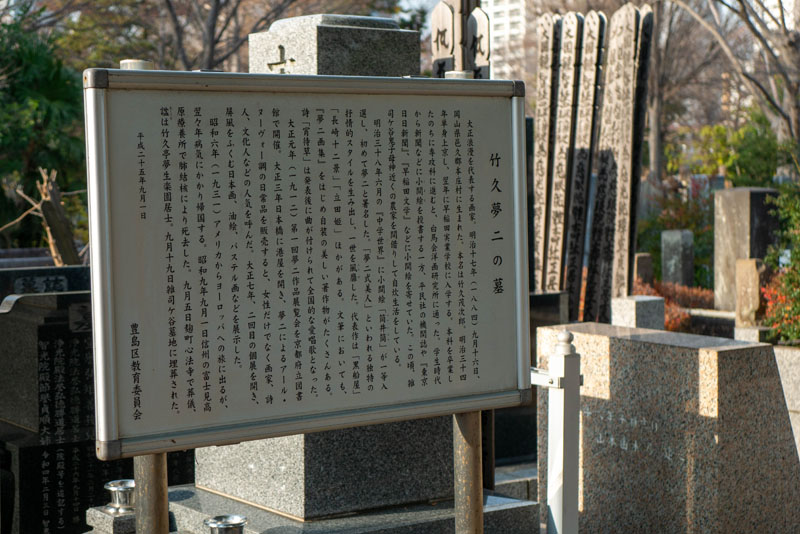
These informational signs are invaluable in a place like this, as it is also the resting place of historical legends like Natsume Sōseki, Nagai Kafū, and Lafcadio Hearn. Without such guidance, one might easily pass by these significant figures without ever realizing the weight of the history resting beneath their feet.
What struck me most was the presence of small benches, wooden tables, and even flowerbeds tucked into quiet corners. With sunlight filtering through the leaves and fallen foliage softening the pathways, the entire cemetery felt calm and gentle. It did not feel like a place of sorrow, but rather a space for reflection and everyday moments. This might be where the true difference between cemeteries in Taiwan and Japan lies: not just in their form, but in how the living and the departed continue to gracefully share the same space.
Zoshigaya Cemetery – Basic Information
- Address:1-25-4 Minami-Ikebukuro, Toshima City, Tokyo, 171-0022, Japan
- Nearest Stations:
- About 3 minutes on foot from either Kishimojin-mae Station or Toden-zoshigaya Station on the Toden Arakawa Line
- About 5 minutes on foot from Zoshigaya Station on the Tokyo Metro Fukutoshin Line
- Opening Hours:Open all day (no gate or wall enclosure)
- Note:
- Free entry; visitors can explore the grounds at their own pace.
- On-site directional signs and information about notable historical figures are available.
Reflection – On a Ginkgo-Filled Afternoon, I Found the Warmth of Life in Zoshigaya
Originally, I thought I could sum up my visit to the Zōshigaya Handmade Market in a single article, but exploring the Kishimojin Temple grounds, savoring the limited-edition dango, and making a spontaneous stop at Yumeji’s resting place took up far more space than expected. This neighborhood is simply too layered to rush; there is so much I want to capture that I decided to split my story into two parts. This allows me to give the artisans and their booths the dedicated space they deserve in the next installment.
A significant reason for this choice is how incredibly well-curated the market is. Each booth possessed its own distinct charm, with works that weren’t just cute or practical, but reflected the creators’ unique visions for everyday life. Even when I didn’t make a purchase, I found myself collecting numerous business cards, which I look forward to sharing in the next article for those who might want to follow these artists or visit them in person.
The overall atmosphere was especially appealing—perhaps it was the blanket of golden ginkgo leaves softening the winter light, but the entire space felt wrapped in a quiet blessing. Unlike typical retro-themed markets, Zōshigaya felt more like a gentle proposal for “living well.” Given that Kishimojin Temple is a long-standing guardian for mothers and children, tasting the warm Osendango—a tradition dating back to the Edo period—felt like a quiet form of prayer in itself.
My brief stop at the cemetery only deepened my appreciation for the area’s profound connection to literature and the arts. From the streetcars of the Toden Arakawa Line slowly passing by to the stalls filled with crafted utensils and textiles, every moment felt like a scene from daily life gradually building into a fuller picture of this community. It’s no wonder so many people recommend this place; next time I’m in Tokyo, I’ll certainly set aside a full day just to wander through it all again.
*Unless otherwise noted, all photos in this article were taken by the author (yanshoto.com) during personal travels and are fully copyrighted. Please do not reproduce or use them for commercial purposes without prior permission. Thank you for your understanding and respect.
Nearby Accommodation Experiences (This link leads to a page written in Chinese only.)
- Staying Solo at Juyoh Hotel: A Japanese-Style Single Room and a Convenient Tokyo Base Starting from Minami-Senju Station
- Staying Solo at Hotel Accela: A Convenient Location near Minami-Senju Station, with Skytree Views from the Women-Only Floor and a Surprise Encounter with the Sanja Matsuri at Asakusa Shrine
Related Market Articles (This link leads to a page written in Chinese only.)
- Aozora Market at Tokyo’s Hanazono Shrine: A Morning Stroll Through Antiques on a Carpet of Ginkgo Leaves
- An Evening Stroll at the Toshi-no-Ichi in Asakusa, Tokyo: Experiencing the Year-End Atmosphere of Edo Traditions
- Exploring the Setagaya Boro-ichi in Tokyo: A Winter Tradition Held Only Twice a Year and Designated as an Intangible Folk Cultural Property of Tokyo
- Zoshigaya Handmade Market & Otori Shrine Visit (Part 1): A Winter Afternoon of Temple Markets, Dango Tasting, and a Visit to Yumeji’s Grave
- Zoshigaya Handmade Market & Otori Shrine Visit (Part 2): Year-End Prayers Among Ceramics and Winter Sunlight at a Local Shinto Shrine
✦ 喜歡這篇文章嗎?
《煙雲漫筆》的每月慢信會收錄這樣的片段,也會分享一些未公開的草稿與旅行筆記。
如果你也想一起閱讀,歡迎留下信箱。