
- Solo Stay at Juyoh Hotel: A Private Japanese-Style Room Near Minami-Senju, with Easy Bus and Subway Access Around Tokyo - 2026-09-28
- Visiting Oisesan Geku Main Store in Ise: More Than Purifying Salt Spray, with Cleansing Fragrances, Goods, and Limited Gachapon - 2026-09-14
- More Than One Atami One-Day Pass: Atami 1-Day Pass vs. Atami Mankitsu Pass, with Route Tips, Luggage Storage Service, and My Travel Experience - 2026-08-31
This journey turned out to be far beyond my expectations.
At first, I only planned to visit a few incense shops in Kyoto. The main purpose of this trip was to take an exam, not to go sightseeing or shopping. Visiting shops was only meant to be a small extra activity. However, by the third day, I had already visited half of the shops I marked on Google Maps without even realizing it. When I noticed this, I was honestly surprised. Had I really visited that many shops?
When I looked again at the remaining shops, I saw that several were quite far away. One shop was strongly recommended and considered a must-visit, and another was located near my kimono school. After excluding those, only two shops were left, and I thought, since there were only two, I might as well visit them as well.
Because I ended up visiting almost all of the shops, this complete guide series became possible. Since there are many shops, putting everything into a single article would make it too crowded. Therefore, I divided the guide into three parts based on location.
In this first part, I will introduce incense shops located in the central area of Kyoto: Nakagyo Ward, Kamigyo Ward, and Shimogyo Ward. Among them, Kousaido (香彩堂) was a shop I decided to visit on the spot, while the other shops were already part of my original plan. In particular, Yamadamatsu Incense-Wood Co., Ltd. (山田松香木店) was one place I definitely wanted to visit.
Although I visited many incense shops, my connection with incense did not begin very long ago. My first experience with Japanese incense happened at work, during a Japanese cultural fair held at a department store. The event space was small, and the food stalls were located very close to other booths. The smell of cooking oil was so strong that it made my eyes uncomfortable. Even though I am not very sensitive to smells, I still felt uncomfortable.
At that time, my supervisor brought some Japanese incense and lit it. As soon as it started burning, the air around us changed. Staying near the incense felt much more comfortable. That was the first time I truly realized that incense could make such a difference.
Later, I also saw vendors selling Japanese incense at other Japanese cultural fairs. They would light incense from time to time, and the scent always felt calm and pleasant. During my breaks, I went to look more closely and discovered that my favorite scent was agarwood (沈香, Jinkō). However, the agarwood incense used in my family’s Buddhist altar often made my eyes uncomfortable. This difference made me curious about Japanese incense.
The incense sold at those events was a bit expensive, so I only bought a small box. Still, that experience led me to make a promise to myself. During this study trip, I wanted to fully explore and purchase Japanese incense.
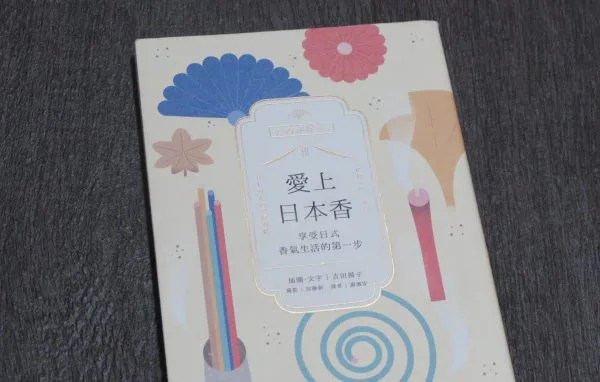
Before the trip, I also bought a book called Falling in Love with Japanese Incense: The First Step to Enjoying Japanese Fragrance in Daily Life (『愛上日本香:享受日式香氣生活的第一步』) as a reference. Most of the shops I visited on this trip were introduced in this book.
The book is written in a very clear and easy-to-understand way. It explains different types of incense, scent categories, incense tools, and how to use them. It even describes how incense is used in Japanese funerals. I highly recommend this book to anyone interested in Japanese incense.

Before departing, I happened to attend a Kōdō lecture held in Qingshui, Taichung, titled “Searching for the Scents of Kyoto: A Century-Old Incense Shop in the City of Uji Tea” (尋找京都的氣味~百年香舖。宇治茶都). I joined the lecture to learn more about Japanese incense and its cultural background.
During the lecture, I asked the instructor several questions about how to choose incense. For example, how to identify pure incense made from natural aromatic wood, and what to do when your sense of smell becomes tired after smelling too many scents. The instructor also brought many incense-related items purchased from Kyoto. Several of them were very interesting, and I quietly remembered them as references for my own shopping list.
At the beginning, I did not plan to write an article about this experience. I only took photos of the shops where I made purchases, mainly as personal memories. Later, when I decided to write about these incense shops, I noticed that photography was prohibited inside most of the stores.
Because of this, the photos in the following articles will only show the shop exteriors and the items I purchased. These photos represent my personal collection from this trip.

The shop introductions in this series are organized by area. In this part, the focus is on Nakagyo Ward, Kamigyo Ward, and Shimogyo Ward. This should make it easier for readers to plan their itinerary when visiting Kyoto.
I should also mention that my Japanese is very limited. Most of the time, I communicated with the staff using simple gestures. There were probably services or explanations available, but I did not have the language ability to ask properly. Visitors with basic Japanese skills will likely be able to receive more detailed assistance and a better overall experience than I did.

Rinryusho (林龍昇堂)

Rinryusho (林龍昇堂) is a long-established incense shop founded in Tenpō 5, which corresponds to 1834. The shop is located in a slightly remote area. I visited this shop because my kimono school was nearby. After getting off at Horikawa Sanjo bus stop, I would pass by the shop on my way to school. The shop has a very traditional atmosphere, so one day I decided to step inside before class.
I chose to visit before class instead of after. My teacher’s lessons were quite intensive, and after class I was usually too tired and just wanted to return to my accommodation to rest and eat.
When I opened the door and entered the shop, the right side displayed various items, mostly incense burners and related tools. The left side was both a workspace and a display area, mainly showing incense products. In the workspace, many pieces of wood were placed on the table. The shop layout felt like a classic Kyoto machiya style shop.
Among all the incense shops I visited, only this shop and Ishiguro Incense Shop (石黒香舗) had this type of layout. However, at Ishiguro Incense Shop, the workspace was used for sewing scented sachets, while at Rinryusho, the staff were making different types of incense products.
Because the workspace and display area shared the same space, there was limited room to display products. During this trip, I mainly wanted to buy incense made from natural aromatic wood, such as wood-based incense sticks or pressed incense. I was not planning to buy incense with added fragrance ingredients. However, most of the products on display appeared to include additional fragrance.
I asked one of my classmates to help translate briefly, but even he found it difficult. The topic was too specialized.
Despite the language barrier, the shop staff made an effort to introduce their products. They kindly lit several incense sticks so I could smell them. After communicating through simple gestures, I purchased pressed incense made from Byakudan, which is sandalwood, and another incense with a plum fragrance.

當There was also a small incident during checkout. When the staff was using the calculator, they accidentally pressed an extra zero. The price changed from 540 yen to 5,400 yen. This shocked me for a moment. I thought, I cannot afford this.
One of the more unique products at Rinryusho is called Shima-kō (島香). These are made by pressing highly pure incense ingredients into special shapes by hand. According to the book Falling in Love with Japanese Incense: The First Step to Enjoying Japanese Fragrance in Daily Life, the ash keeps its original shape after the incense finishes burning.
Unfortunately, I did not buy any. I remember seeing them, but I was too nervous at the time and completely forgot about it.
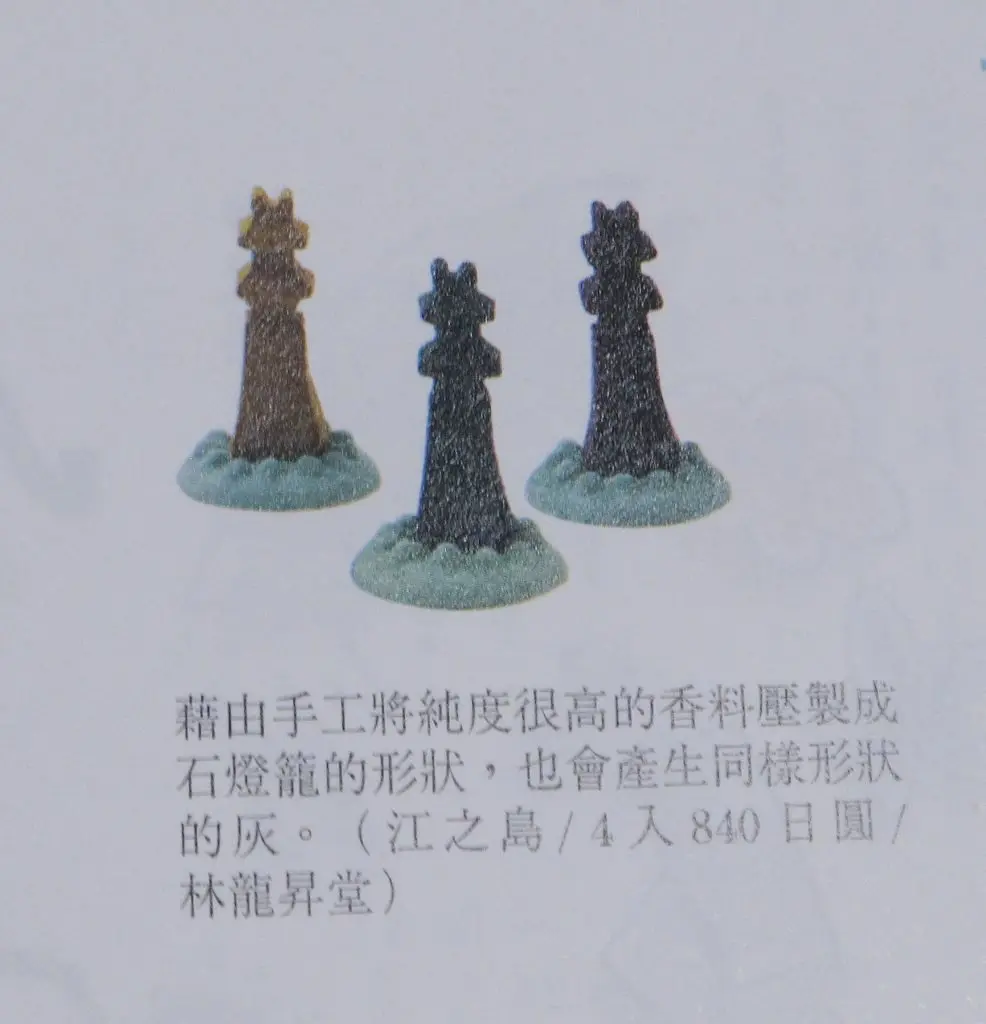
Another notable feature of Rinryusho is their wide selection of cone-shaped incense. Compared to other incense shops I visited later, very few of them offered this shape in large quantities. If you prefer cone-shaped incense, this shop is one of the best places to find more options.
I highly recommend visiting this shop if you have basic Japanese language skills. After checking their official website later, I realized they offer many excellent incense products that were not displayed in the store, likely due to the limited space. Being able to communicate even a little in Japanese would help the staff better understand your preferences and recommend suitable products.
Near Rinryusho, there is also a long-established sweets shop called Yonemitsu (米満老舗). I was able to buy a dessert I had wanted to try for a long time, called “Sweets Kan” (スイーツ柑), which is a mandarin orange filled with jelly. I was very happy to finally find it.
Since this area is slightly outside the main tourist center, you may want to combine your visit with nearby attractions such as Nijo Castle (二条城), Shinsen-en Garden (神泉苑), Mikane Shrine (御金神社), and the Honnoji Temple Ruins (本能寺跡).
If you are interested in walking around this area in kimono, there is also a studio nearby called Miyabi Yuki (雅ゆき), which offers kimono and traditional court costume experiences, including the Junihitoe (十二単), also known as Itsutsuginu Karaginu Mo (五衣唐衣裳).
Although the Junihitoe experience at the Nishijin Textile Center (西陣織会館) is more affordable, Miyabi Yuki offers a wider variety of styles and allows multiple participants at the same time. In addition to the Junihitoe, they also offer other traditional court costumes such as Kariginu (狩衣), Ue no Hakama (袿袴), Suikan (水干) for boys, and Junihitoe for girls.
These experiences are perfect for family portraits, group photography, or special travel memories. They also offer outdoor photography plans, and even allow visitors to try a traditional court game called Tōsenkyō (投扇興). There are many options available, and if your budget allows, this is a wonderful place to consider.

There is no need to worry about whether they accept foreign visitors. From time to time, Taiwanese students come here to take kimono dressing classes, so they are quite familiar with Taiwanese customers.
Yes, this is my school. Even though students receive the experience at the same regular price, I still want to give them some support. Traditional cultural schools that are willing to welcome foreign students are not very common, so I truly appreciate their openness.

From Horikawa Sanjo bus stop, you can take a bus north and get off at Horikawa Shimodachiuri bus stop. From there, it is just a short walk to Yamadamatsu Incense-Wood Co., Ltd. (山田松香木店).
Yamadamatsu is located closer to the Kyoto Imperial Palace. However, Bus No. 51, which stops near the Kyoto Imperial Palace, runs very infrequently. Taking a bus to Horikawa Shimodachiuri is usually more convenient.
Another option is to take the Kyoto Municipal Subway to Marutamachi Station. This route is often faster and slightly closer to the shop.
Rinryusho 林龍昇堂
- Opening Hours: 9:00 AM–6:00 PM on weekdays; 9:00 AM–5:00 PM on Saturdays and public holidays
- Closed: Sundays
- Address: 15 Hashihigashizumecho, Sanjo-dori Horikawa Higashi-iru, Nakagyo-ku, Kyoto 604-8258, Japan
- Phone: +81-75-221-2874
- Parking: One parking space available next to the shop
- Official Website: Hayashi Ryushodo Official Website
Yamadamatsu Incense-Wood Co., Ltd. 山田松香木店
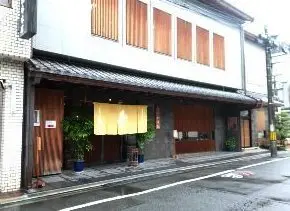
The most important thing to know about Yamadamatsu Incense-Wood Co., Ltd. (山田松香木店) is that they offer tax-free shopping.
This was the only incense shop I visited that provided tax-free service, so it is worth mentioning again. I never expected an incense shop to offer tax-free shopping. I only realized this at the checkout counter. Because of that, I had to return to my accommodation to get my passport.
Since I was already going back, I also took the opportunity to visit MUJI near Kyoto City Hall. It was easy to reach by bus, so I decided to stop by and do some shopping as well.
Later, while writing this article, I discovered that if you register as a member, you can also receive an additional 5 percent discount. This makes the savings even greater.
This shop is truly exceptional. They offer a wide selection of incense, beautifully crafted products, and service of the highest quality. If you only have time to visit one incense shop in Kyoto, I highly recommend Yamadamatsu Incense-Wood Co., Ltd.

For some reason, entering Yamadamatsu Incense-Wood Co., Ltd. felt like stepping into a luxury boutique. The interior was spacious and calm, with an elegant atmosphere. Although the shop felt refined and high-end, it did not feel intimidating or unapproachable.
The flower-shaped scented sachets, called Nioibukuro (匂袋), were especially beautiful. There were many different designs, and each one was crafted with great detail. I was tempted to buy one, but they were so delicate that I worried I might hesitate to actually use them. In the end, I decided to focus on incense products instead.
The selection of incense holders and incense plates was not very large, but each piece was unique and carefully made. For example, there was a crystal incense holder with a chrysanthemum design, as well as seasonal incense holders representing different flowers. Since I visited during summer, I chose one featuring Kikyo, which is the bellflower.
They also offered incense holders created in collaboration with local Kyoto ceramic artists. These included designs based on the twelve animals of the Japanese zodiac. Each one cost less than 1,000 yen, which felt very reasonable considering their quality. If you enjoy unique and artistic incense accessories, this shop is a wonderful place to explore.

They also offer fabric incense containers called Nunokōgō (布香合). Before this trip, I had already decided to buy only one of these. However, the ones here were made with limited-edition Rinpa-style fabric. The fabric was elegant and charming, and the price was similar to the ones at Ishiguro Incense Shop. I was very happy to add one to my shopping basket.
Later, when I was packing to return to Taiwan, I realized that this particular container was slightly smaller than I expected. Fortunately, it was not a problem. I only have a small amount of kneaded incense, so the size is still sufficient. In truth, this was simply something I chose because I loved the design.

Because I own a silk furisode made from pure silk, I wanted to buy some insect-repellent incense for storage use. Previously, I had tried insect-repellent incense from Shoyeido (松栄堂) at a friend’s place, but the scent felt too strong for me. The ones from Ishiguro Incense Shop were also quite intense, and I did not have much impression of the ones from Kyukyodo (鳩居堂). I was almost ready to give up.
However, the insect-repellent incense from Yamadamatsu Incense-Wood Co., Ltd. was exactly what I was looking for. It is sold individually, but since I planned to use it regularly, I decided to buy three pieces for future replacement.
Fortunately, insect problems in my room are not serious. None of my silk kimono have ever shown signs of insect damage. Because of this, I was able to choose based on scent preference rather than effectiveness alone. If insect protection is the main priority, stronger scents may be more effective. Some experienced kimono owners strongly recommend Shoyeido’s insect-repellent incense, but personally, I do not enjoy that particular scent.

The shop also offers a wide range of products, including the kneaded incense I was looking for, which is used for gentle room fragrance.
Compared to Shoyeido, Yamadamatsu Incense-Wood Co., Ltd. has fewer varieties of kneaded incense. Because my budget was limited, and I also wanted to compare the differences between brands, I chose a more affordable and commonly available scent, plum fragrance.
Yamadamatsu packages their kneaded incense in sturdy boxes, which helps protect the incense from being damaged or compressed. Among the shops I visited, Kyukyodo had the simplest packaging for kneaded incense.

The shop also carries a complete range of tools used in Kōdō, the Japanese art of incense appreciation. They even had the fire chopsticks, called hibashi (火箸), which I had wanted for a long time. However, I had already purchased a pair from Shoyeido earlier. The ones here were actually more affordable, and they were also eligible for tax-free purchase.
Finally, the most important item was incense sticks. Yamadamatsu Incense-Wood Co., Ltd. offers an extremely wide selection of incense sticks. If your main interest is incense sticks, this is definitely the place to visit.
The incense sticks made from more natural aromatic wood, such as agarwood and sandalwood, were displayed near the counter. While I was carefully looking through them, a staff member quietly approached and explained, using gestures, that they could light the incense for me to smell before purchasing.
To be honest, it was quite overwhelming. The selection was very detailed. For example, agarwood incense alone was divided into several different categories, and each category had multiple variations. At other shops, there were usually only five or six options, which made choosing easier. Here, it was difficult even to decide where to begin. In the end, I selected four or five types and asked the staff to light them so I could compare the scents.
I eventually purchased two boxes of agarwood incense sticks. Previously, at a Japanese cultural fair, I had smelled many incense samples and discovered that I liked agarwood but did not enjoy sandalwood. However, during this trip to Kyoto, I unexpectedly bought many sandalwood incense products. It was only at Yamadamatsu that I finally found agarwood incense that I truly liked. Although both boxes were agarwood, each one had its own distinct scent.
The incense sticks were available in two or three different box sizes. At first, I considered buying the smaller boxes. However, the staff were very kind, and I truly liked the scent after testing it. Since I did not know when I would visit Kyoto again, I decided to buy the larger boxes instead, so I would not have to worry about running out anytime soon.

Because this area is slightly removed from the main tourist routes, it is best to combine your visit with nearby attractions such as the Kyoto Imperial Palace and Goō Shrine (護王神社). Another option is to walk from Horikawa Shimodachiuri bus stop to Yamadamatsu Incense-Wood Co., Ltd. Along the way, you will pass the Former Kyoto City Hall building.
The Former Kyoto City Hall (京都市旧本庁舎) is a Baroque-style building with a strong Taisho-era atmosphere. Some parts of the building are still in use today. The assembly hall in particular has a very distinctive historical character.
The building is open to visitors, but it may be closed when official meetings are held. I had hoped to visit, but unfortunately it was closed on the day I went, which was an even-numbered Saturday.
The opening hours are Tuesday through Friday, and on Saturdays only during odd-numbered weeks. Since I visited on an even-numbered Saturday, I could only pass by and admire the building from outside.

After visiting Yamadamatsu Incense-Wood Co., Ltd., if you continue walking toward Kyoto Station, there are two more incense shops along the way: Shoyeido (松栄堂) and Kousaido (香彩堂). Both shops are conveniently located along Karasuma Street.
Shoyeido’s main store is easier to access by subway. Similarly, Yamadamatsu Incense-Wood Co., Ltd. is also more convenient to reach by subway.
Kousaido, on the other hand, can be accessed easily by either bus or subway, making it a flexible option depending on your travel route.
Yamadamatsu Incense-Wood Co., Ltd. 山田松香木店
- Opening Hours: 10:30 AM–5:00 PM
- Closed: Third Sunday of each month, Obon holidays, and New Year holidays
- Address: 164 Kageyukoji-cho, Muromachi-dori Shimodachiuri-agaru, Kamigyo-ku, Kyoto 602-8014, Japan
- Phone: +81-75-441-1123
- Parking: Available at the shop and at an additional parking area about 60 meters south of the store
- Official Website: Yamadamatsu Official English Website
Shoyeido Kyoto Main Store 松榮堂 本店
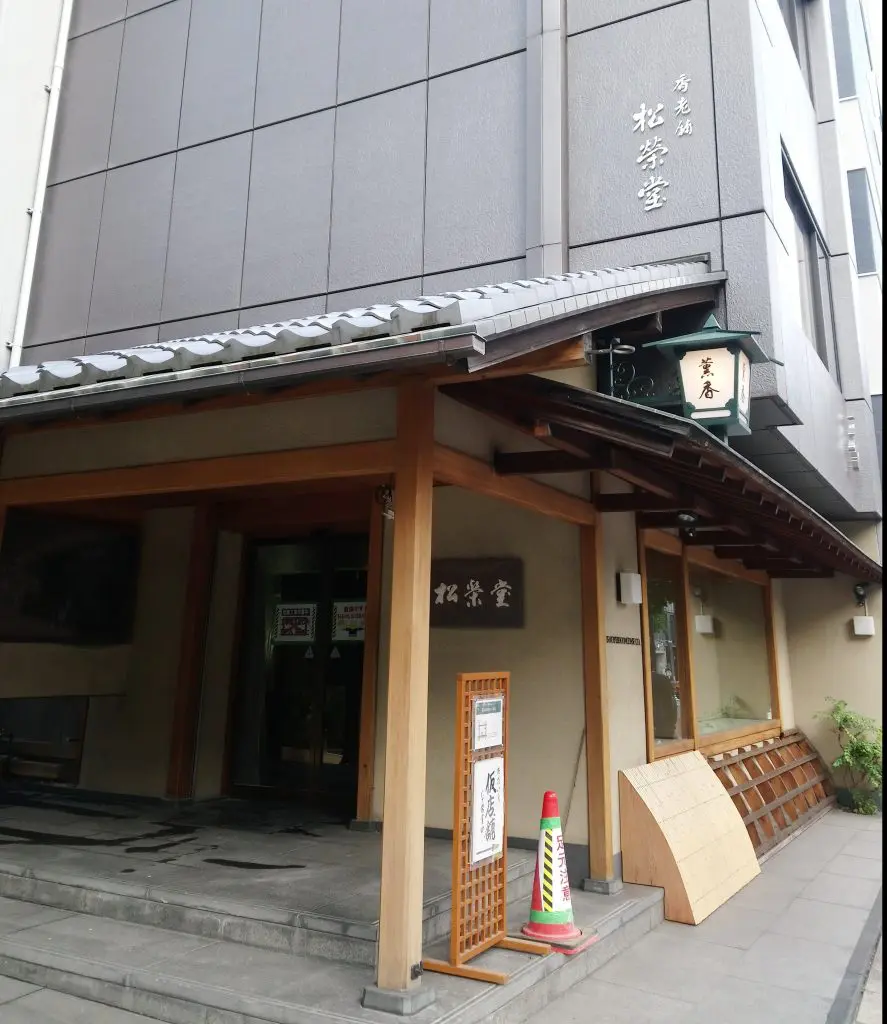
When I visited, the main store was under renovation. I only stopped briefly at the entrance to take a photo, then went to their temporary store location instead.
The temporary store was smaller than the Sanneizaka branch, and the product selection was quite similar. Since I had already visited the Sanneizaka store, there was nothing new for me to buy, even though I had hoped to find a few more incense sticks to add to my collection.
In terms of transportation, only a few buses stop nearby, so taking the subway is usually faster and more convenient. Another option is to walk a bit farther to reach bus stops with more frequent service. I personally walked toward Kyoto Station until I found a bus stop with more routes, then took a bus to Kousaido. In fact, it was only one stop away.
Because it was raining and I had a one-day bus pass, I decided to take the bus. If you do not have a bus pass, you may want to consider whether walking would be more practical.
PS: A reader kindly shared that Shoyeido Kyoto Main Store also offers tax-free service. If you need tax-free shopping, remember to bring your passport.
Shoyeido Kyoto Main Store 松榮堂 本店
- Opening Hours: 9:00 AM–6:00 PM
- Closed: Open year-round, except during the New Year holiday period
- Credit Cards: Accepted
- Tax-Free: Available
- Address: Karasuma Nijo, Nakagyo-ku, Kyoto 604-0857, Japan
- Phone: +81-75-212-5590
- Official Website: Shoyeido Official English Store Information
Kousaido 香彩堂

I originally visited Kousaido simply to check the location. It is a relatively young incense shop compared to other long-established stores. My initial plan was just to take a look and leave. However, it was raining heavily that day, and I was the only customer in the shop. The staff member, Ms. Komura, warmly welcomed me. Her kindness made me feel that I should buy something, so this became a purchase made purely because of the service.
The shop offers incense holders and incense plates with their own unique designs. Some styles were also similar to those found at other shops such as Niimi Sann and Iwai. Many of the designs were cute and appealing, especially for customers who enjoy decorative incense accessories. However, after visiting many incense shops, these styles no longer strongly attracted my interest.
As for incense sticks, most of the products focused on pleasant and approachable fragrances, rather than the natural aromatic wood scents I was looking for. The staff member explained that the incense could be lit for testing. To show that I understood, I selected two types for her to demonstrate.
One of them was a moss fragrance incense. After it was lit, I found the scent very pleasant and calming. Although it was not made from natural aromatic wood, I decided to purchase a small box, mainly because of the kind service I received. This became the only incense product I bought on this trip that was not based on natural aromatic wood.

Another item I purchased because of the staff’s kindness was insect-repellent incense. I had not planned to buy any more, since I had already purchased some at Yamadamatsu Incense-Wood Co., Ltd.
However, the staff’s warm recommendation was difficult to refuse. Since I was wearing kimono that day, she explained that this type of insect-repellent incense is especially suitable for protecting kimono during storage. Because of her thoughtful suggestion, I decided to buy one.

Her bright smile and the gentle scent made it difficult to resist. The fragrance had a light, herbal character, similar to traditional Chinese medicine, but very soft and pleasant. Because of this, I decided to buy it.
Later, I also purchased insect-repellent incense from Toyoda Aizandō (豊田愛山堂). Now, each of my kimono has its own insect-repellent incense. Originally, I only planned to use it for my silk furisode.
At Toyoda Aizandō, I saw a phrase that left a strong impression on me:“Even without words, hearts can understand each other. When sincerity is present, true connection naturally follows.”
This reminded me of Ms. Komura at Kousaido. Even though she knew we could not communicate well through language, she still made great effort to explain the products using gestures and demonstrations. For example, when showing incense used for Buddhist altar offerings, she used expressive hand movements to help me understand that it was not intended for everyday use.
Her sincerity made me feel that I should support her in some way. In the end, I chose a few items that I knew I would use. Although the purchase was small, I still felt very grateful for her kindness and effort.
Kousaido 香彩堂
- Opening Hours: 9:30 AM–6:30 PM
- Closed: No regular closing day is listed; open on weekends and public holidays
- Address: 1F, 335 Kamiyanagicho, Karasuma-dori Bukkoji Higashi-iru, Shimogyo-ku, Kyoto 600-8099, Japan
- Phone: +81-75-344-6905
- Official Website: Kousaido Official Website
*Unless otherwise noted, all photos in this article were taken by the author (yanshoto.com) during personal travels and are fully copyrighted. Please do not reproduce or use them for commercial purposes without prior permission. Thank you for your understanding and respect.
Related Incense Articles
- Discover Kyoto Through Fragrance: 10 Unique Incense Shops to Visit Part 2 (English version coming soon.)
- Discover Kyoto Through Fragrance: 10 Unique Incense Shops to Visit Part 3 (English version coming soon.)
- Beginner’s Kōdō Experience in Taiwan: Understanding Agarwood Origins and How to Use Incense Tools Properly (This link leads to a page written in Chinese only.)

