- A Magical Visit to Kinomiya Shrine in Atami: A Helpful Omikuji and a Healing Journey Beneath a Thousand-Year-Old Camphor Tree - 2026-10-22
- Where to Return Omamori in Japan: Notes on Shrines with Old Amulet Collection Boxes 01 - 2026-10-15
- Discover Kyoto Through Fragrance: 10 Unique Incense Shops to Visit Part 2 | Kiyomizu-dera and Yasaka Shrine Area - 2026-10-08

Kinomiya Shrine was not originally part of my Atami travel plan. Although it is one of the city’s well-known attractions, its location was a little separate from the rest of my route, and the transportation did not fit my schedule very well. I also was not especially interested in visiting shrines at the time, so I did not plan to go there at first.
That changed when I was collecting travel information at the Atami Tourist Information Center. A brochure for Kinomiya Shrine on the shelf caught my attention. It had a very stylish design and even came in two different versions. The information was surprisingly detailed, and it also included a sample one-day itinerary. I suddenly became curious about the shrine and started to think that it might be more interesting than I had expected. That evening, I went back to my hotel and spent quite a while reading the brochures and comparing information online. Even so, I still had not decided whether to visit by the time I left the hotel the next morning.
What finally made me visit Kinomiya Shrine was actually a small accident. That morning, after leaving my luggage at the station, I accidentally dropped my camera. The camera body was fine, but my main zoom lens was damaged. The other lenses I had brought were all prime lenses, including one mainly used for portraits. I tried using it to photograph scenery, but the focal length was not very suitable for flowers.
I still followed my original plan and went to Atami Plum Garden, but I could not really enjoy myself. The accident had suddenly limited what I could photograph, and my trip was only halfway through. I was also going to Tokyo for a class later, and there was no way I could properly record the class using only a portrait prime lens. I honestly had no idea what I was going to do. In the end, I thought that maybe visiting a shrine and changing my mood might help. Perhaps something unexpected would happen.
Before coming to Japan, I had already read a little about Kinomiya Shrine online. Most of the photos and travel articles made it look quiet and peaceful, so I imagined it would feel similar to Izusan Shrine. But when I actually arrived, I realized how wrong I was. Maybe it was because I visited on a weekend, but the shrine was full of people, with visitors and cars constantly coming and going. It even had its own parking area. This was completely different from the quiet sacred space I had imagined. Kinomiya Shrine was clearly much more popular than I had expected.
- Exploring Kinomiya Shrine with the Atami Mankitsu One-Day Bus Pass: History and the Energy of Its 2,000-Year-Old Sacred Camphor Tree
- A Lively and Modern Shrine Visit: Crowds, Buildings, and My First Impressions
- After Drawing an Omikuji: A Series of Lucky Turns Through Prayer, Omamori, and Food Memories
- Final Thoughts: Where Lively Crowds Meet Quiet Sacred Spaces, and an Unexpected Feeling of Gentle Protection
Exploring Kinomiya Shrine with the Atami Mankitsu One-Day Bus Pass: History and the Energy of Its 2,000-Year-Old Sacred Camphor Tree
Kinomiya Shrine is located in Atami, Shizuoka Prefecture, and its history goes back more than 1,300 years. According to shrine tradition, in 710, a fisherman pulled a wooden image from Atami Bay. A young boy then appeared and said that he was Itakeru no Mikoto. He asked to be worshipped in a place surrounded by seven camphor trees where the sound of the waves could not be heard. The villagers eventually found that place in the Nishiyama area of Atami, where Kinomiya Shrine now stands.
The shrine enshrines Yamato Takeru no Mikoto, Itakeru no Mikoto, and Onamuchi no Mikoto. It is also said that the famous general Sakanoue no Tamuramaro once prayed here for victory before battle and later spread the worship of Kinomiya to other regions. Today, Kinomiya Shrine is regarded as the head shrine of 44 Kinomiya shrines across Japan.
Because of this history, the shrine has strong connections with protection, courage, good fortune, and good health. One unusual feature is the Shunan-yoke Mamori ( 酒難除守 ), an amulet meant to protect people from troubles caused by alcohol. Kinomiya Shrine has also long been known for prayers to give up drinking.
The most famous symbol of the shrine is its sacred camphor tree, known as the O-kusu ( 大楠 ). It is more than 2,100 years old and has a trunk circumference of about 24 meters. The tree is designated as a National Natural Monument and was recognized as the second-largest giant tree in Japan in a 1992 survey by the Ministry of the Environment. It is not only a popular photo spot, but also one of the shrine’s most important sacred places.
The O-kusu is also known as one of Japan’s famous “power spots.” According to shrine tradition, walking once around the tree is said to add one year to your life. If you walk around it while keeping your wish quietly in your heart without telling anyone, your wish may also come true. With its long history and powerful presence, it is easy to understand why so many visitors come here to pray.

Besides the main sacred tree, there is another large camphor tree called the Second O-kusu ( 第二大楠 ) along the path from the shrine entrance to the main hall. It is smaller than the main O-kusu, but according to the sign at the shrine, it is also more than 1,300 years old.
What makes this tree special is that it survived a lightning strike. Much of the inside of its trunk is now hollow, but the tree is still alive and covered with green leaves. Because of its strong ability to survive and continue growing, it has become a symbol of resilience and renewal, and many visitors also stop here to pray.

On this visit, I went to Kinomiya Shrine after seeing the plum blossoms at Atami Plum Garden. This route worked well because I was using the Atami Mankitsu One-Day Bus Pass ( 熱海満喫乗車券 ) from Izu Hakone Bus. The buses are not especially frequent, but the pass is inexpensive and can easily pay for itself after a few rides. It covers several popular places in Atami, including Kinomiya Shrine, Atami Plum Garden, and the Ginza area, so it is useful for a one-day trip around central Atami and nearby attractions.
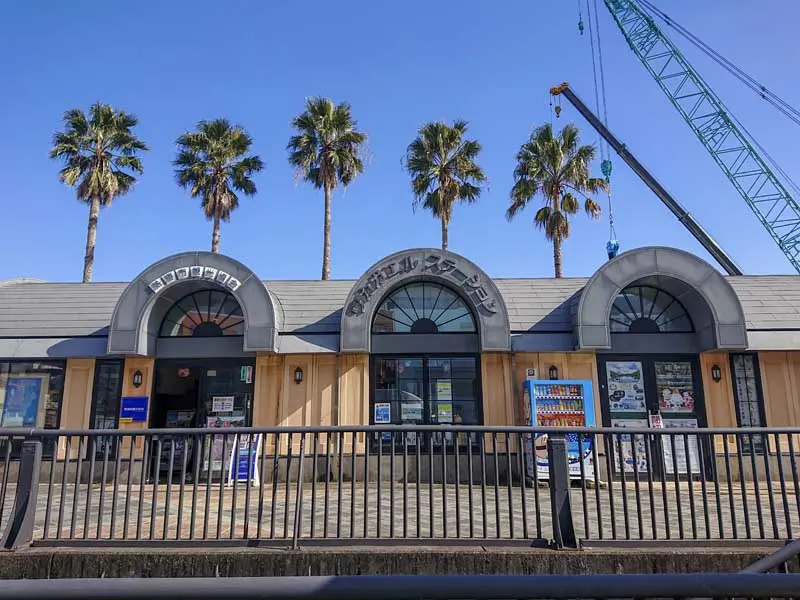
That day, I wanted to save time instead of waiting for the bus, so I got off at JR Kinomiya Station and walked to the shrine. The walk takes about five to ten minutes. After walking straight from the station, I passed through a small underpass and continued toward the shrine entrance.
The pedestrian path along this section is quite narrow and is more comfortable for people walking in single file, so it is a good idea to pay attention to people coming from the other direction. Even though the road is narrow, the walking route is well marked and easy to follow. I actually enjoyed the feeling of walking beside the railway structures on the way there. For the return trip, I simply took the bus from the stop in front of Kinomiya Shrine, so I did not need to walk back to JR Kinomiya Station.

If you want to visit places such as MOA MUSEUM OF ART or Izusan Shrine, or simply want more flexibility when traveling around Atami, the Tokai Bus Atami 1-Day Pass ( 熱海1日券 ) is another useful option. It is issued by Tokai Bus and covers a wider area, making it one of the most convenient passes for exploring Atami by bus. However, the Yu-Yu sightseeing loop bus is currently suspended, so it is best to check the latest bus routes and timetables before your trip.
You can also reach Kinomiya Shrine by train. From JR Atami Station, Kinomiya Station is only one stop away on the Ito Line, and the shrine is about a five-minute walk from the station. Kinomiya Station is an unstaffed station, so if you are using a paper ticket and want to keep it as a souvenir, you may need to contact a remote operator through the intercom. In that situation, knowing a little Japanese can be helpful.
Kinomiya Shrine ( 來宮神社 )
- Address: 43-1 Nishiyamacho, Atami, Shizuoka Prefecture, Japan
- Phone: 0557-82-2241
- Official Website:https://kinomiya.or.jp/
- Opening Hours: 9:00–17:00(Prayer Reception, Until 16:30)
A Lively and Modern Shrine Visit: Crowds, Buildings, and My First Impressions
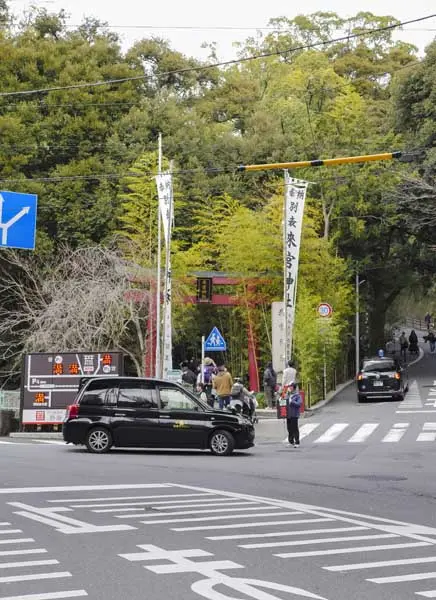
Before my visit, I always imagined Kinomiya Shrine as a quiet and peaceful place surrounded by greenery and old trees. But when I arrived, the weekend crowds were far bigger than I had expected. The triangular area around the shrine entrance was packed with both people and cars, and even the approach outside the torii gate felt a little chaotic.
People often say that Japanese people are very orderly, but this was one of those places where I could see a different side of that image. I had not even entered the shrine yet, and I was already surprised by how popular it was. There was no special event that day, but the crowds still reminded me a little of Senso-ji in Asakusa.
After entering the shrine grounds, I saw the usual torii gates and the Worship Hall, but what surprised me most was how modern and large some of the buildings felt.
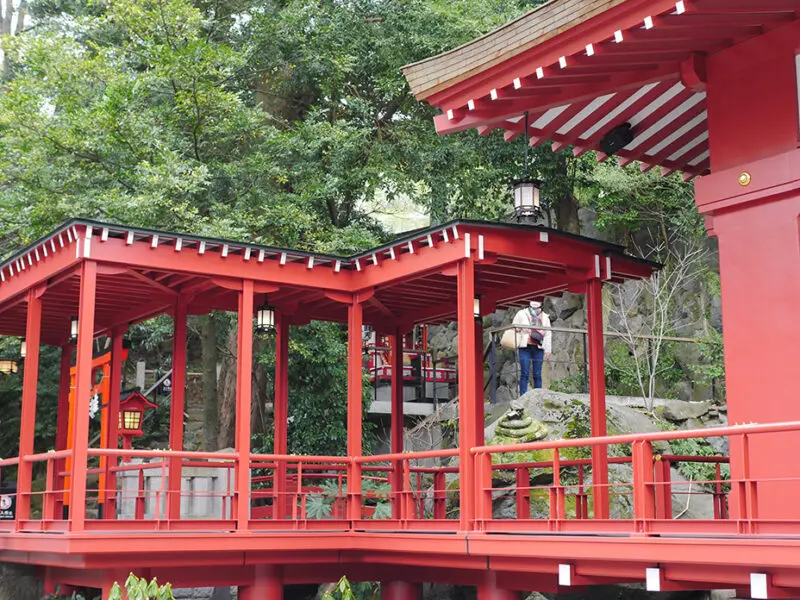
The Kagura Hall, for example, looks like a traditional Japanese shrine building at first glance. But when I walked closer, I noticed something unexpected. The corridors are actually supported by steel structures. The contrast between its traditional appearance and modern construction was quite interesting.
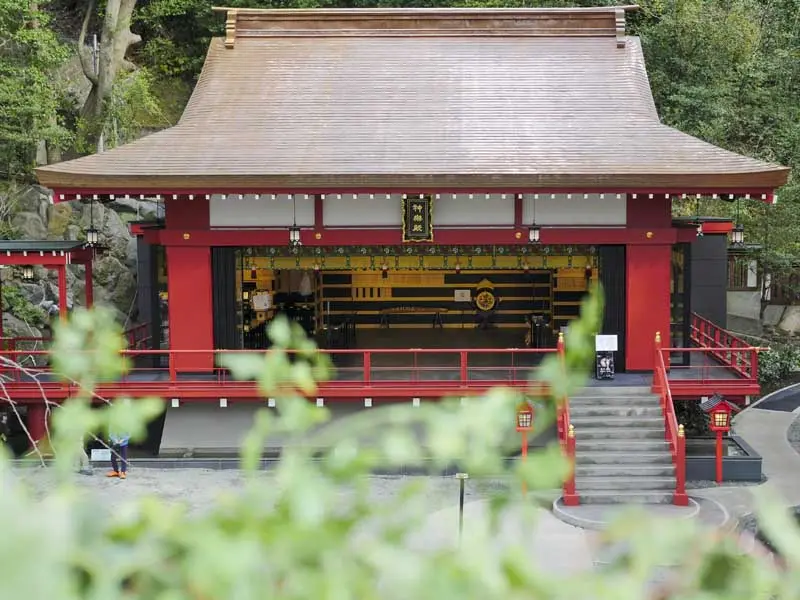
At first, I was impressed by how grand the Kagura Hall looked, especially because it is connected to other parts of the shrine by covered corridors. But when I walked closer, I noticed that some parts I had assumed were made of wood were actually steel structures painted vermilion.
Surprisingly, they blend very naturally with the main shrine buildings. The combination of steel and wood works much better than I expected, and nothing feels out of place.
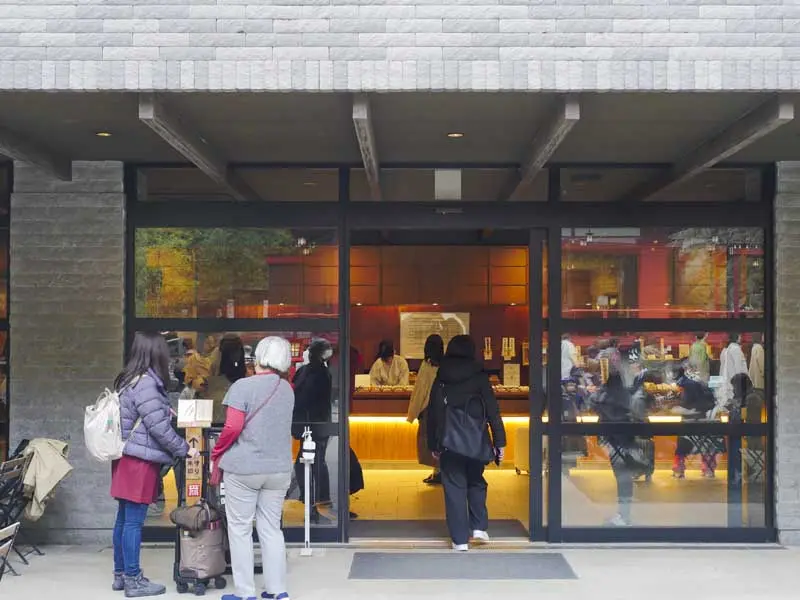
The shrine office completely changed my image of what a shrine shop could look like. It felt more like a stylish café in Ginza, with a spacious and elegant interior. The layout was also very clear, with separate areas for choosing omamori and other prayer items and for making payment. This helped keep people moving and made the crowded space feel much more organized.
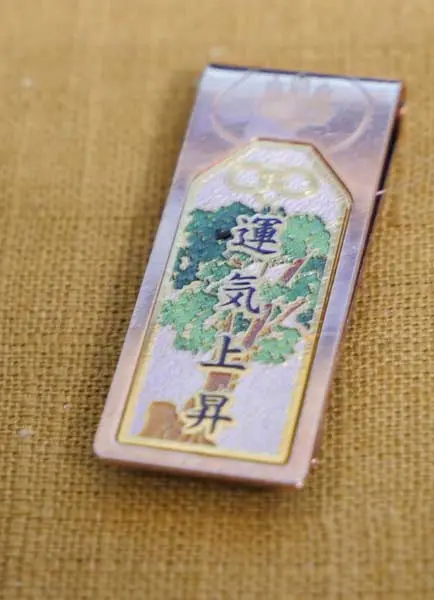
The omamori and other items were also displayed in a very thoughtful way, with many different designs to choose from. One that especially caught my attention was the clip-style omamori. It was small, practical, and very modern in design. I normally do not have much interest in buying omamori, but somehow the stylish atmosphere of the shrine office made everything feel more tempting. The price also seemed quite reasonable, so in the end, I could not resist buying one.
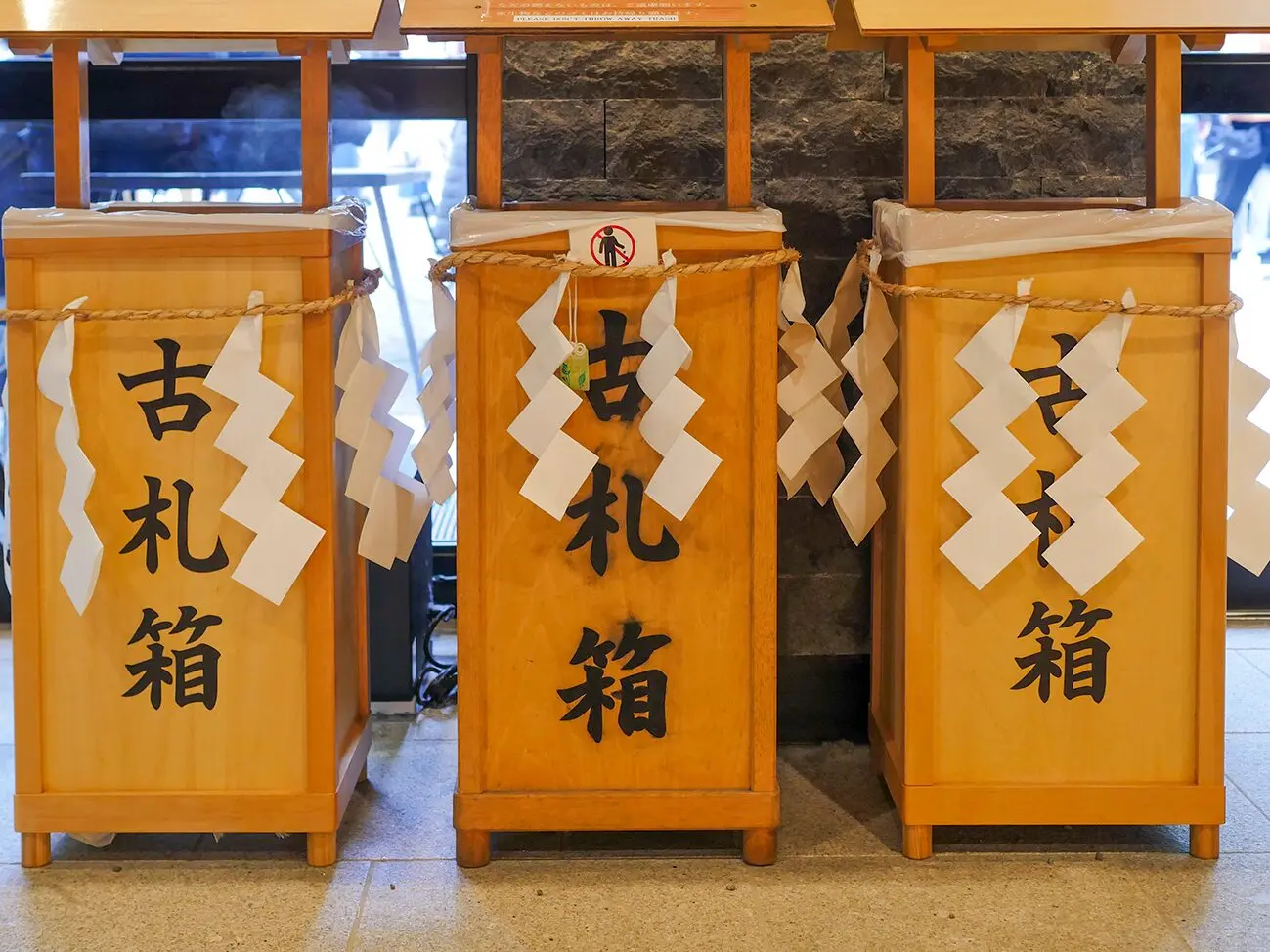
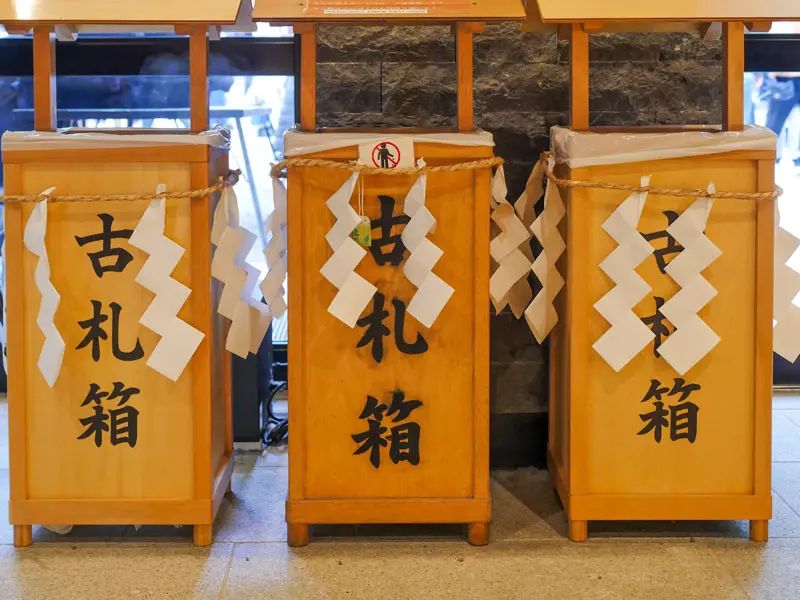
Inside the shrine office, there is also a special area for returning old omamori and ofuda, called the Kofuda Osame-sho ( 古札納所 ). Instead of the small wooden box I usually expect to see at shrines, there are three large wooden return boxes placed on the right side of the entrance. They are quite easy to find once you look around, and their simple wooden design fits surprisingly well with the modern atmosphere of the shrine office.
Next to the shrine office is a shrine-run open café called Saryo Houko (茶寮 報鼓), where visitors can sit down, eat, and take a break. However, it was very crowded when I visited, and I was more interested in Torii no Musubiha (鳥居の結び葉), the outdoor sweets shop beside the torii gate, so I decided not to eat here.
The layout of the entire Sanshuden (参集殿) is also very well planned. Its rooftop is designed as part of the path leading from the sacred O-kusu. After walking around the giant tree, visitors can follow the uphill path naturally toward the rooftop rest area. When I visited, there was even a monkey performance and seating where people could enjoy the view. From there, the stairs lead back down to the area where omamori are offered. The whole route feels very smooth and carefully designed.
This modern layout also showed me another side of Shinto culture. Kinomiya Shrine has a very long history, but many of its buildings feel surprisingly modern. From the Kagura Hall (神楽殿) to the Sanshuden (参集殿), traditional forms are combined with modern materials and practical design. The spaces are wide, easy to walk through, and clearly designed for the large number of worshippers and tourists who visit today.
To me, this also brought to mind two ideas found in Shinto: Tokowaka (常若), the idea of remaining fresh and ever young, and Harae (祓), the purification of impurity. In Shinto, sacredness does not depend only on how old a building is. Continuing rituals and keeping a sacred space clean and renewed are also important. Kinomiya Shrine gave me a strong sense of how an old religious tradition can continue while adapting naturally to modern life.
After Drawing an Omikuji: A Series of Lucky Turns Through Prayer, Omamori, and Food Memories
After waiting in line and praying at the Main Hall, I naturally headed over to draw an Omikuji ( おみくじ ), just as I usually do when visiting a shrine in Japan. Omikuji are traditional fortune slips commonly found at Japanese shrines. After praying, visitors draw one to see what guidance or advice the gods may have for their future. It is a form of fortune-telling, but it can also be seen as a message of blessing and reminder from the gods.
Kinomiya Shrine had many different types of omikuji to choose from. I picked the O-kusu Omikuji ( 大楠御神籤 ) because having the blessing of the shrine’s ancient sacred camphor tree somehow felt especially powerful. My fortune was Chukichi ( 中吉 ), which means “moderately good luck.”
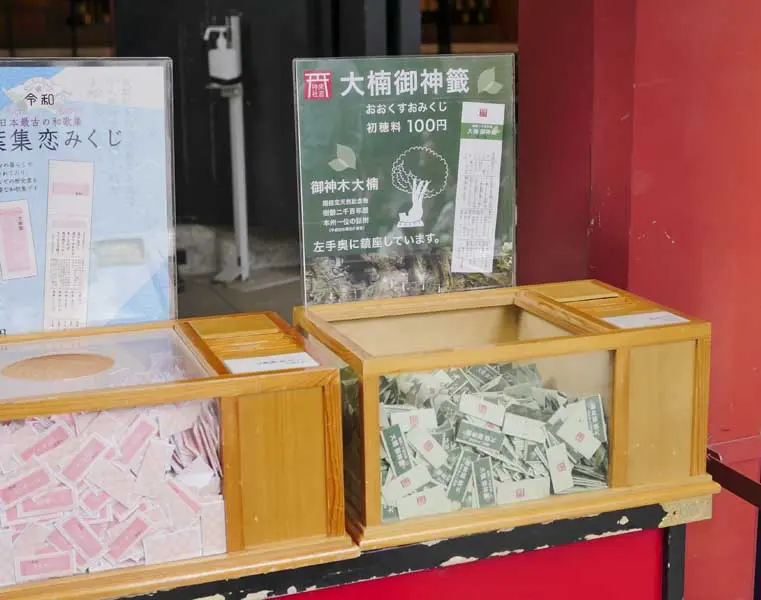
At that moment, I could not help thinking, “My camera lens is already broken, so where is the good luck in this?” It was hard to feel very lucky after such an accident. Still, one line in the omikuji stayed in my mind. Under the travel section, it said something like, “If you want to go, just go. You have nothing to lose.”
For some reason, that simple message left a strong impression on me. I kept thinking about it during the rest of my trip, and later, while I was in Tokyo, something unexpected happened that made those words feel strangely accurate.
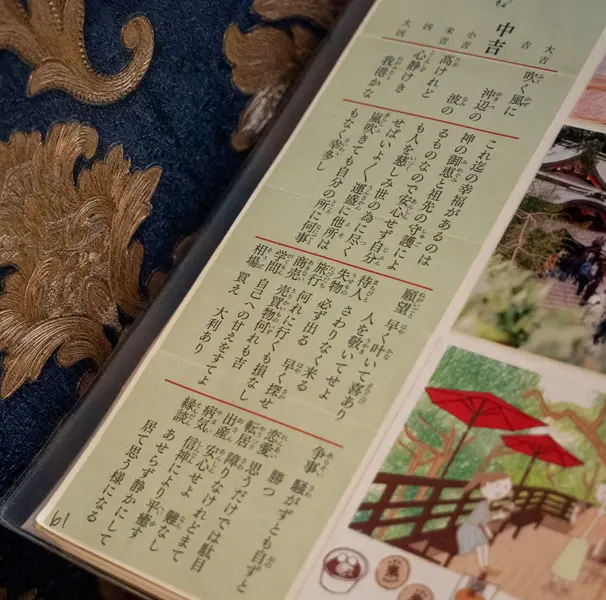
After arriving in Tokyo, I was still unsure whether I should go to Shinjuku ( 新宿 ). If I went, I would not get there until almost 8:00 p.m., which was a very awkward time because most second-hand camera shops would already be closed.
Still thinking about the message from my omikuji, I decided to go anyway. In the end, I found a camera shop that stayed open until 8:30 p.m., and they actually had a suitable replacement lens for me. There were even two lenses to choose from, and the price was reasonable enough for me to afford. I bought one on the spot.
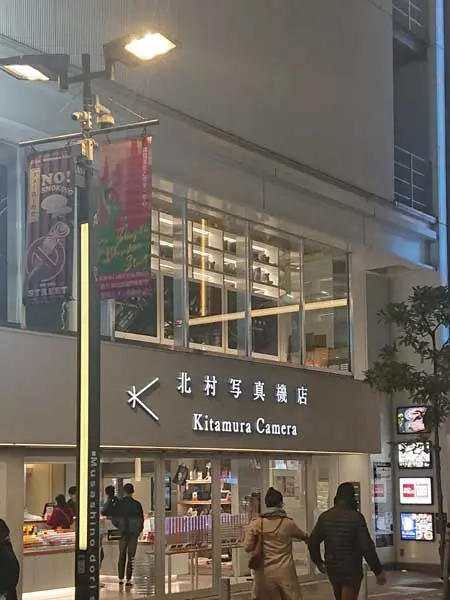
A few days later, I visited several other secondhand camera shops and realized that none of them had the lens I needed. In other words, there was no chance that I would later find the same lens at a cheaper price. I became even more grateful that I had decided to go to Shinjuku that night, because the replacement lens allowed me to photograph my classes without any problems.
Maybe it was only a coincidence, but as the saying goes, when science ends, mystery begins. Either way, I was sincerely grateful for the protection of the Japanese kami ( 神様 ).
There were already omikuji near the Main Hall, but I also found another box of fortune slips beside the sacred O-kusu. I have to say that the presence of the 2,100-year-old tree felt incredibly powerful. To me, it almost seemed to have an even stronger presence than the Main Hall itself. I was very tempted to draw another omikuji there, but I have a personal rule that I only draw one fortune at each shrine. So I stopped myself and kept the Chukichi I had already drawn as a memory of this trip.
When I returned to the shrine office, I was actually looking for the Kofuda Osame-sho, where old omamori and ofuda can be returned. Instead, I found myself surrounded by colorful displays of omamori and other shrine items. Kinomiya Shrine has several unusual charms, including items inspired by the sacred O-kusu and the Shunan-yoke Mamori, which is meant to protect against troubles caused by alcohol.
I had not planned to buy another omamori, especially after breaking my camera lens earlier that day, but the small metal clip style Unki Josho Mamori (運気上昇守) was both practical and beautifully designed. The words “improving your luck” also felt especially appropriate, so somehow I ended up buying one. When I reached the counter, I noticed that I could also receive a Goshuin (御朱印), so I added that to my travel notebook as well. In the end, both became quiet little souvenirs of a day that had started with bad luck but slowly turned in a much better direction.
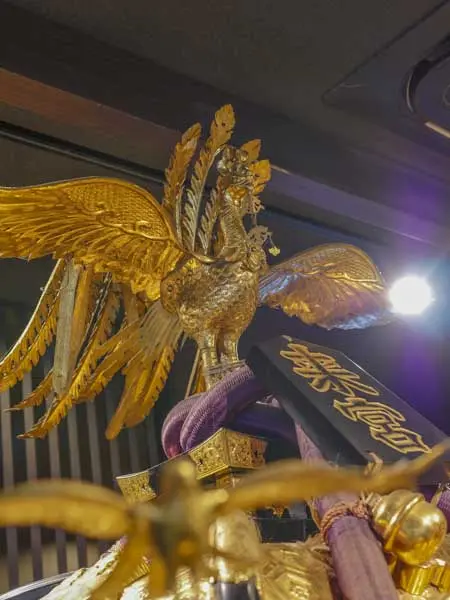
As I was getting ready to leave, a Mikoshi (神輿) near the entrance caught my attention. A mikoshi is an important part of Shinto festivals. It is a portable sacred shrine used to carry the kami through the streets during a festival. Mikoshi are often beautifully decorated with pillars, roofs, railings, and sometimes a phoenix on top. The procession represents the kami temporarily leaving the shrine and traveling through the local community to bring blessings and protection to the people.
The mikoshi at Kinomiya Shrine was especially impressive and beautifully decorated. Many shrines across Japan have elaborate mikoshi, but what I found unusual here was how closely visitors could look at it. Being able to stop and examine all the small details made it feel even more special.
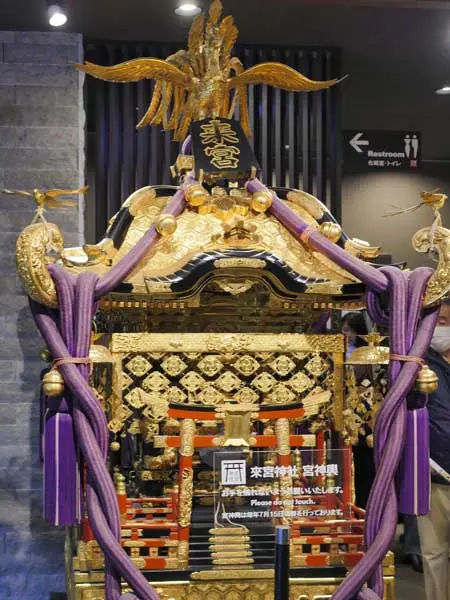
When I attended Sanja Matsuri ( 三社祭 ) before, the mikoshi were also displayed for visitors to see, but barriers kept everyone at a certain distance. Later, I saw another mikoshi at Fukutoku Jinja Shrine ( 福徳神社 ) in Tokyo, but it was behind a gate, so I could only look at it through the gaps. That made it feel even more special that I could get so close to the mikoshi at Kinomiya Shrine.
Because I could see it from such a short distance, I paid particular attention to the Hōō ( 鳳凰 ) on top. Every small detail was beautifully made and left a strong impression on me. Being able to stand there quietly and admire the mikoshi somehow felt connected to everything else that had happened during this trip, giving the moment a deeper meaning for me.
There are several places to sit and relax inside Kinomiya Shrine, including cafés and rest areas. However, they were quite crowded when I visited. I had also noticed Torii no Musubiha (鳥居の結び葉) beside the first torii gate when I arrived, and it was selling a sweet that looked like grilled dango. Since I really like grilled dango, I had already decided that this was where I wanted to take my break.
It also reminded me of a similar grilled dango I had once eaten in Setagaya ( 世田谷 ), so I was especially looking forward to trying it. Another small advantage was that I could enjoy my snack while keeping an eye on the bus stop nearby. That way, I could relax and also check whether my bus was coming at the same time.
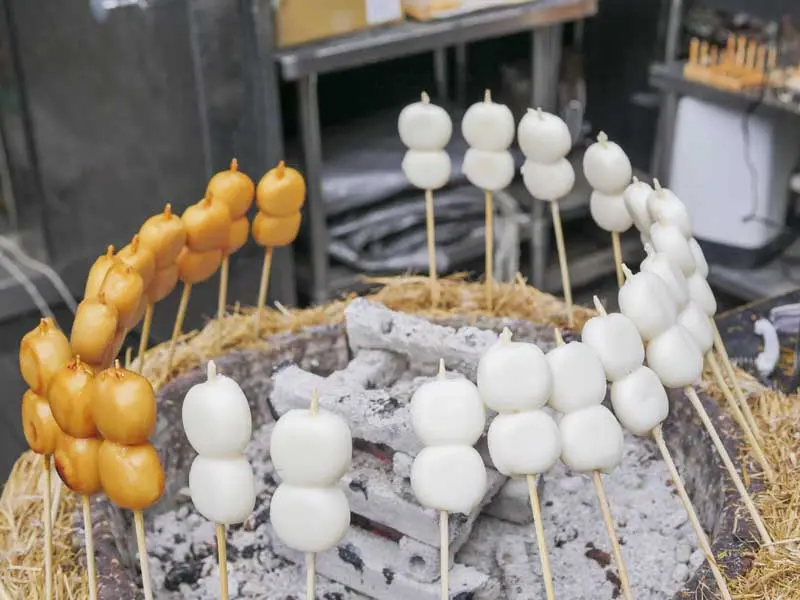
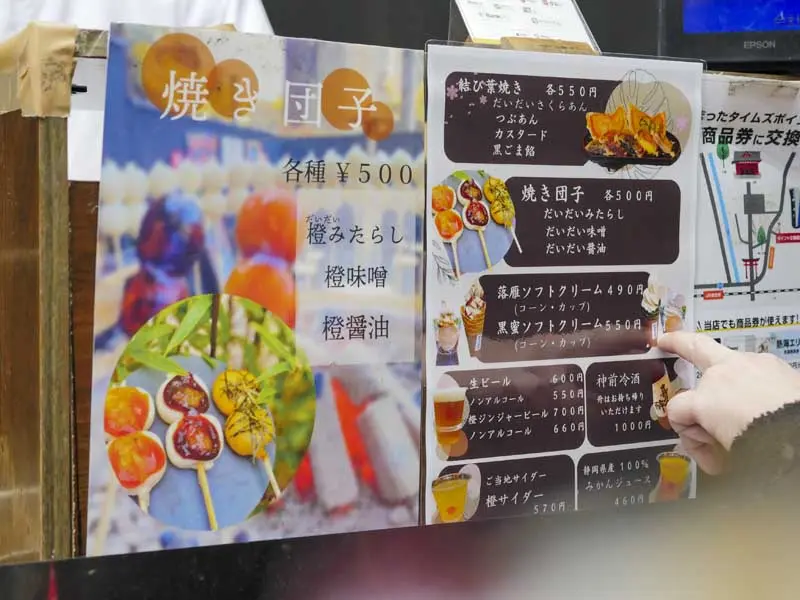
The grilled dango I tried came with an Izu citrus soy sauce, which had a sweet and sour flavor with a light salty taste. It suited my taste perfectly. Eating warm grilled dango on a cold winter day felt especially comforting. It was almost as if all the complicated emotions from this trip were slowly turning into a sweet food memory. With every bite, some of the frustration and disappointment from earlier that day seemed to disappear.

Then I saw my bus coming and suddenly worried that I might miss it and arrive in Tokyo too late. I rushed away so quickly that I accidentally left my wallet on the seat. Luckily, the man sitting next to me noticed it. When I hurried back, he was already looking for the owner of the wallet. At that moment, I really felt as if my luck had started to change. At the very least, I no longer felt as low as I had that morning when I broke my camera lens.
Final Thoughts: Where Lively Crowds Meet Quiet Sacred Spaces, and an Unexpected Feeling of Gentle Protection
Kinomiya Shrine was originally just a place I visited to change my mood, but it unexpectedly became one of the most healing and lucky stops of my entire trip. The words on my omikuji, “If you want to go, just go. You have nothing to lose,” did not make much sense to me at first.
But when I arrived in Tokyo, hesitated about going to Shinjuku, and finally decided to go anyway, I suddenly understood what they meant. I found a replacement lens at the only camera shop that was still open, and from that moment, the rest of my trip seemed to go much more smoothly.
There were several other small surprises after that. I made a last-minute decision to visit Cultural Path Futaba Museum (文化のみち二葉館) in Nagoya and unexpectedly found a Hinamatsuri (ひなまつり) exhibition there. I was even lucky enough to hold a hina doll for a photo. Later, when my accommodation in Ise was suddenly canceled, I ended up booking a smoking room at Miyuki Station Hotel Nagoya (ミユキステーションホテル名古屋). I expected at least a little cigarette smell, but surprisingly, I could not smell any at all. These unexpected little moments of happiness somehow felt like extensions of the message and blessing from that omikuji.
Kinomiya Shrine was extremely crowded because I visited on a weekend, but perhaps the two ancient sacred camphor trees helped create a different atmosphere. I usually dislike noisy and crowded places, yet I still felt strangely calm there. The shrine seemed to hold noise and silence at the same time, much like everyday life, where confusion and order, happiness and disappointment often exist together.
Looking back, maybe dropping my camera was not completely bad luck after all. If my lens had not broken, I probably would never have visited Kinomiya Shrine. I might have simply continued to the cherry blossoms around Itogawa Promenade (糸川遊歩道) near Atami Ginza instead and missed this entire experience. Thinking about it that way, perhaps that lens protected me from something worse. I still feel a little sad about it, though. It was my only Leica lens.
And somehow, the perfect ending to this shrine visit was a simple grilled dango. The citrus soy sauce flavor, with its sweet, sour, and lightly salty taste, slowly pulled me out of all the stress I had felt earlier that day. If I return to Atami for cherry blossoms in the future, whether I am also visiting Kawazu (河津) in eastern Izu or enjoying the blossoms in central Atami, I think I would still make a special trip back to Kinomiya Shrine just for this dango. I still think the dango I once had at a market in Setagaya was softer and more delicate, but the citrus soy sauce here was a wonderful surprise. Next time, I definitely want to try another flavor.
*Unless otherwise noted, all text and photos in this article were created and taken by the author of yanshoto.com during my travels and are protected by copyright. Please do not reproduce, reuse, or use them for commercial purposes without permission. Thank you for your understanding and respect.