
- Where to Return Omamori in Japan: Notes on Shrines with Old Amulet Collection Boxes 01 - 2026-10-15
- Discover Kyoto Through Fragrance: 10 Unique Incense Shops to Visit Part 2 | Kiyomizu-dera and Yasaka Shrine Area - 2026-10-08
- Solo Stay at Juyoh Hotel: A Private Japanese-Style Room Near Minami-Senju, with Easy Bus and Subway Access Around Tokyo - 2026-09-28
When visiting shrines in Japan, it is easy to buy omamori (御守, Japanese amulets) to pray for good luck or protection. However, omamori usually have a suggested period of use. In most cases, it is about one year. Even after that period has passed, it still does not feel right to throw them directly into the trash.
For Taiwanese people, this feeling is a little like having a xianghuodai, or a temple blessing pouch. Most people probably would not dare to casually throw one into the trash. Because of this, one question naturally appears: what should we do with expired omamori?
In recent years, I have traveled to Japan so often that going there sometimes feels almost as easy as visiting another county or city in Taiwan. Still, Japan is a large country. Even if I have visited a certain shrine before, it is not always easy to return to the same shrine again within a short time.
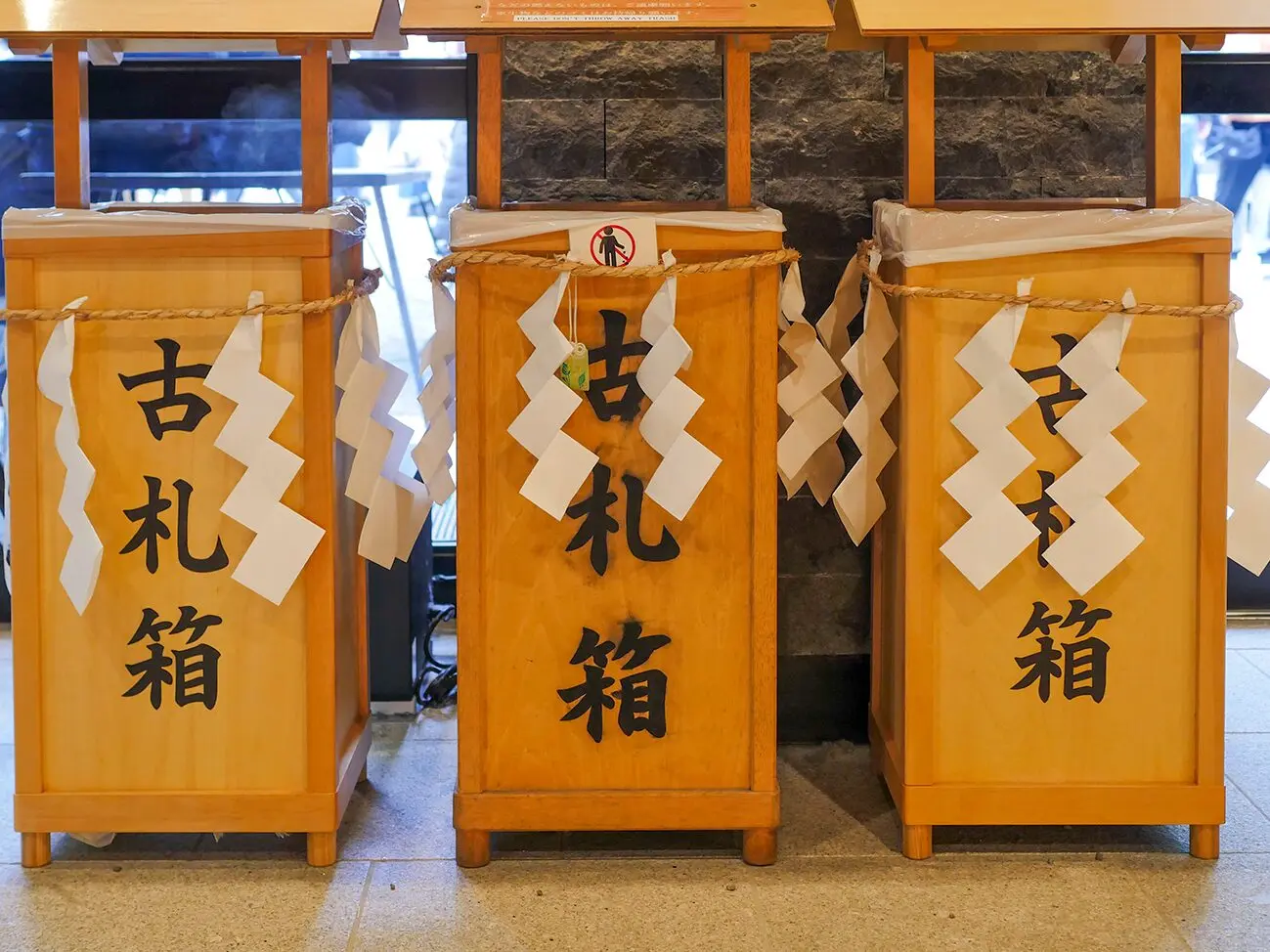
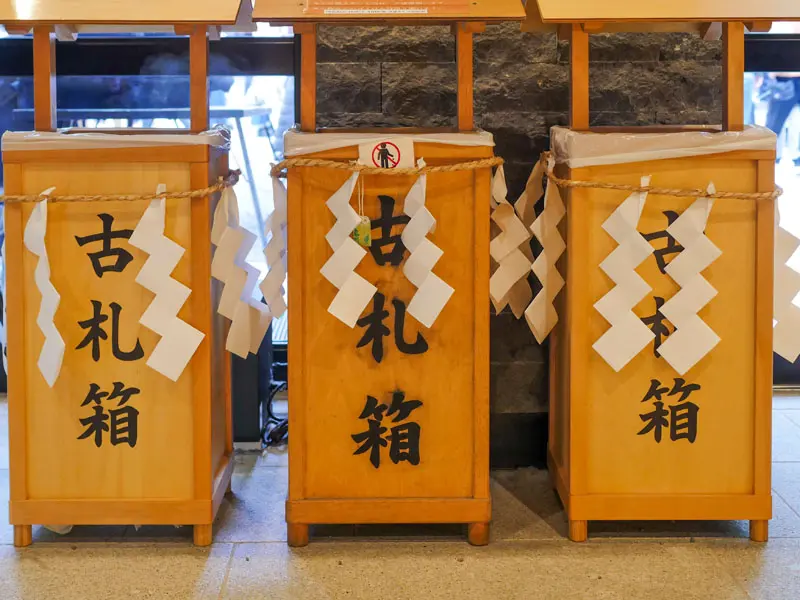
During one of my trips, I accidentally found a kosatsu nousho (古札納所/こさつのうしょ, a collection box for old amulets and ritual items) inside a shrine. I looked at the box out of curiosity and finally learned that it was a place for returning expired omamori, ofuda (神札, shrine talismans), damaged ema (絵馬, wooden prayer plaques), and other religious items.
The word kosatsu (古札, old talismans or old amulets) refers to old or expired omamori and ofuda. The word nousho (納所, a place for returning or offering items) means a place where these items can be returned. In other words, it is a collection box where people can return items that carry prayers or blessings and let the shrine handle them properly.
In principle, shrines usually give priority to accepting omamori from their own shrine. However, if there is no clear sign saying that items from other shrines are not accepted, or that only items from the same shrine can be returned, many shrines will still kindly accept omamori from other shrines.
Later, I also noticed something else. Although shrines and temples may look similar to travelers, they belong to different religious systems and have different return systems. Shrines belong to Shinto, and they mainly accept Shinto items such as omamori, ofuda, hamaya (破魔矢, decorative arrows for warding off evil), and ema. Temples belong to Buddhism, and they handle Buddhist items such as gomagi (護摩木, wooden prayer sticks), omamori, juzu (念珠, Buddhist prayer beads), and memorial or offering talismans.
The rituals for handling these returned items are also different. Shrines usually burn the returned items during a certain ritual. This is called otakiage (お焚き上げ, ritual burning of old sacred items), which symbolizes returning the spiritual power to the gods. Temples may handle the items through Buddhist memorial services or offering rituals.
Because of this, although many collection boxes may look quite similar, Buddhist places may use terms such as nousho (納所, return box), kuyosho (供養所, memorial offering place), or nokyosho (納経所, sutra offering office or temple office). They may all accept expired omamori, but before returning one, I still recommend checking whether the item belongs to the Shinto system or the Buddhist system.
No matter which type it is, this kind of return box is already very convenient for someone like me who cannot visit Japan all the time. When I first learned about it, I was secretly excited. I thought that from then on, I could bring expired omamori with me when traveling in Japan. If I happened to find a kosatsu nousho, I could simply return them there and solve the problem easily.
However, reality always likes to play tricks on people. After I made up my mind to return my old omamori to a kosatsu nousho, strange things started happening. Whenever I carried omamori that needed to be returned, no matter how many shrines and temples I visited, I could not find a single place with a return box. But whenever I did not bring any omamori with me, I would easily run into shrines or temples that had one. This strange loop has happened for at least two trips. My feeling slowly changed from excitement to helplessness. At some point, I was even speechless. Could Murphy’s Law please stop doing this to me?
Then during one trip, I decided to leave the omamori at home first. I thought I would return them one by one to their original shrines in the future. But on the second day of that trip, I found a long-awaited kosatsu nousho at the Okinawa branch of Izumo Taisha (出雲大社, a major Shinto shrine originally based in Shimane). I honestly felt a little broken at that moment. This time, I had only brought the omamori I needed to return to Naminoue Shrine (波上宮, a major shrine in Okinawa) and Ise Jingu (伊勢神宮, Ise Grand Shrine) to Japan. But I did not have them with me at that exact moment. If I had brought them along, I would not have needed to make another trip to Naminoue Shrine. I could have used that time to visit somewhere else.
I can only say that when a person is extremely frustrated, the result may actually be calmness. So I made a decision. I would start organizing a list of shrines and temples where I had seen a kosatsu nousho. This way, I could remind myself to bring old omamori on future trips. It could also help other people with similar needs.
If you are traveling in Japan and cannot easily return to the original shrine, this list may be useful. At least it may help you avoid repeating the same Murphy’s Law situation as me: when you bring the omamori, you cannot find a return box; when you do not bring them, you see them everywhere.
That said, I do not travel to Japan that often. Also, since I feel that I may be more compatible with the atmosphere of Japanese deities, I tend to choose shrines with better spiritual energy when I want to walk around and clear my mind. Because of that, the number of shrines I visit is not actually that large. On top of this, not every shrine has a kosatsu nousho. So this article series will probably be updated slowly.
In the early stage, I will first collect all the places I have found in this article. In the future, if the number grows to a certain level, I may organize them by region or theme. I may also write more detailed notes and categories for these shrines and temples so the articles are easier to read.
I hope this list can help people avoid a few unnecessary trips. I hope you do not have to be like me, holding old omamori in your hands while running into dead ends everywhere. If my frustrating experiences can help someone avoid even one wasted trip, then all those moments of disappointment will have become useful after all.
Okinawa
I did not originally plan to visit Okinawa. It was simply because of my flight arrangement. Flying to Okinawa first and then transferring to Tokyo was actually cheaper than taking a direct flight. Since that was the case, I thought I might as well stay in Okinawa for a few days. It also became the starting point of this learning trip.
I had long heard that Okinawa has a similar atmosphere to Taiwan. Because of that, I was not very interested in visiting Okinawa in the past. If it feels similar to Taiwan, then staying in Taiwan should be enough. But since I was already going there, I decided to plan a short three-day, two-night trip and take a look around.
This time, most of my activities were in southern Okinawa. Since my schedule was limited, it was convenient that both of these shrines were also in the southern area. Whether by public transportation or by car, they do not take too much time to reach. They are quite suitable for independent travelers who only have a short stay.
At first, I did not plan to visit many religious sites. Just arranging the itinerary, attractions, and food already gave me a headache, and I seriously did not have enough time. Unexpectedly, among the only two shrines and temples I visited, both had a kosatsu nousho (古札納所, a collection box for old amulets and ritual items). This made me seriously start thinking about writing a collected article about places with kosatsu nousho. In the end, that is how this article came to be.
Izumo Taisha Okinawa Branch Shrine/ 出雲大社沖繩分社 /いずもたいしゃ おきなわぶんしゃ
I have always wanted to visit Izumo Taisha in Shimane Prefecture, a place often connected with the land of the gods. However, transportation to that area is not very convenient, and financially, I cannot fly to Japan whenever I want. Visiting Izumo Taisha itself as a pilgrimage is even more difficult.
So when I learned that Okinawa also has an official branch shrine of Izumo Taisha, I decided that I had to visit it no matter what. This trip also involved many transfers and a lot of movement, so I thought it would be good to first pay my respects to the local deity and pray for a smooth journey.
Izumo Taisha Okinawa Branch Shrine is not too far away, but its entrance is very low-key. There is no common torii gate at the entrance. If I had not checked it in advance and noticed the signboard carefully, I might have missed it.

The overall layout of the branch shrine is L-shaped. After entering, the first thing you see is a long corridor. If you walk all the way to the end of the corridor, you will reach the shrine office.
When you turn left at the end of the corridor and face the main shrine building, you can see the kosatsu nousho on your right.

If you continue walking forward, you will reach the main shrine building. A very impressive shimenawa rope hangs above it. It reminded me of Izumo Taisha in Shimane.
The shimenawa at this branch shrine already felt grand to me, so I became a little curious about how huge the one at the main shrine must be. I hope I will have the chance to visit and pay my respects there someday.

If you want to draw an omikuji, you can go to the fortune area on the right side of the main shrine building. There are three different types of fortunes to choose from.
Since I already had quite a few lucky charms in my wallet, I was a little worried that the protection from different deities might conflict with each other and cause a bug. So in the end, I chose the simplest paper fortune.
What makes it special is that the fortune here does not clearly say whether it is good or bad luck. Instead, it is written as a poem or a short message.
Overall, this is a small but solemn branch shrine. Although its scale cannot compare with the main shrine, the details of its facilities are handled with great care.
Key Features
- Main Deity: Okuninushi no Okami, also known as Daikokuten. He is known as a deity of relationships and good connections in Japanese mythology.
- Background: This branch shrine was established in Naha City in 1970 to commemorate Okinawa’s reversion to Japan.
- Worship Style: Unlike many other shrines, the worship style here is “two bows, four claps, and one bow.” This shows respect to the deity.
Basic Information
- Address: 1-16-13 Furujima, Naha City, Okinawa Prefecture
- Access: About a 3-minute walk from Furujima Station on the Okinawa Urban Monorail
- Parking: Available. The parking lot is shared with a nearby supermarket. It may be crowded during the New Year period. Motorcycles can also be parked there.
Naminoue Shrine / 波上宮 /なみのうえぐう
I have always liked visiting shrines. It is not only about making wishes. More than that, I enjoy the sense of history and the quiet atmosphere created by wooden shrine architecture. Because of this, I am usually less interested in shrines that were newly built or rebuilt after the war. However, I decided to visit Naminoue Shrine because I had once received an omamori from this shrine. Since I was visiting Okinawa this time, I thought it would be a good chance to return the omamori to its original shrine by hand.
At one point, I almost decided not to go. Two days earlier, I had already found a kosatsu nousho at Izumo Taisha Okinawa Branch Shrine. Because of that, I hesitated a little. I thought I might come across another kosatsu nousho later in the trip, so maybe I did not need to make this extra stop.
But the weather did not cooperate. On the day I was leaving for Tokyo, it rained. Also, I had to fill up the gas tank before returning my scooter, and the nearest gas station was close to Naminoue Shrine. With these two reasons together, I decided to stop by the gas station and visit Naminoue Shrine at the same time.
This visit turned out to be quite dramatic. Before leaving, I suddenly realized that I could not find the omamori from Naminoue Shrine. It was the kind of loss where I had no idea when it had disappeared. The day before, I had just lost my hostel key card. I later found it, but while I was searching, the front desk staff reminded me that it might have fallen into the gap beside the bed. So I wondered whether the omamori might have fallen there too. After all, I had just been packing my luggage, and everything was a little messy.
Unexpectedly, when I lifted the mattress to check, I did not find the omamori. Instead, I found an iPhone 4S. That was honestly shocking.
In the end, I handed the phone to the front desk. The staff member was also stunned when I gave it to them. As for the omamori, just when I was about to continue searching after returning the phone, I suddenly saw it in the hidden pocket of my bag. I was sure I had already checked there earlier and found nothing. At that moment, I felt that maybe this was a reward from the deity for being honest.
Although it rained that day, the weather had already improved by the time I left. When I arrived at Naminoue Shrine, I was actually in a pretty good mood, until I realized that I had to walk uphill to reach the main shrine building. I have to say, I really dislike walking uphill.

Naminoue Shrine feels a little different from shrines on the Japanese mainland. The most obvious difference is probably the many banyan trees here. Shrines on the mainland usually have trees such as ginkgo, maple, or cherry blossom trees. At Naminoue Shrine, however, the most common trees are the banyan trees that feel familiar to us.
It is no wonder that some Japanese people feel Okinawa is not like “typical Japan.” Here, there is the sea, the wind, and large banyan trees. Even the roof tiles have a very Okinawan style. All of these details make the atmosphere completely different from mainland Japan.

Of course, I did not forget the most important task of this visit: returning the omamori. The kosatsu nousho at Naminoue Shrine is located on the right side of the main shrine building, which is on your left when you face the building. It is clearly marked and divided into different categories, so make sure to check the labels carefully before putting anything inside.

Although this visit came with several small troubles, I was still able to return the omamori successfully. In a way, it gave my Okinawa trip a clean and refreshing ending, and also became a good beginning for the next part of my journey on the Japanese mainland.
Key Features
- Main Deities: Kumano Gongen, Hayatamao no Mikoto, and Kotosakao no Mikoto
- Location: Naminoue Shrine is built on a coral reef cliff overlooking Naha Port. It is the only seaside shrine among the Eight Shrines of Ryukyu and is also known as the main guardian shrine of Okinawa.
- History: The exact founding date is unknown, but historical records show that the shrine has a history of at least 700 years. It was destroyed during World War II and rebuilt after the war. Today, it is an important cultural property of Naha City.
- Worship Style: The worship style is the same as at most shrines: two bows, two claps, and one bow. Before praying, visitors can purify themselves at the temizuya water basin.
Basic Information
- Address: 1-25-11 Wakasa, Naha City, Okinawa Prefecture
- Access: Take the Okinawa Urban Monorail, also known as Yui Rail, to Asahibashi Station. From there, it is about a 15-minute walk.
- Official Website:naminouegu.jp
Tokyo
I have actually visited quite a few shrines in Tokyo, but at the time, I never paid special attention to whether they had a kosatsu nousho. Now that I have started to care about this, I no longer feel a strong need to plan shrine visits on purpose. Most of my future trips to Tokyo will probably be short stays of only two or three days before I move on to other places. Once the schedule becomes tight, there is naturally not much extra time to slowly visit shrines.
That said, shrine and temple events in Japan always seem to match my interests in some unexpected way. Whether it is seasonal decorations, omamori, or festival rituals, they often make me curious. So even if I no longer plan shrine visits actively, I will still take a look if I happen to pass by one during a trip. Maybe this kind of casual and gradual collecting actually fits my current travel pace better.
Toyokawa Inari Tokyo Betsuin / 豐川稻荷東京別院 /とよかわいなり とうきょうべついん
I first noticed Toyokawa Inari Tokyo Betsuin because of a visit to Toraya Akasaka across the street. I was having sweets there when I happened to see this impressive temple on the other side of the road.
At that time, I was struck by the long row of banners and the steady flow of worshippers coming and going. For a moment, I thought it must be a very powerful shrine. Later, after doing some research, I learned that it is actually a Buddhist temple: Toyokawa Inari Tokyo Betsuin.
It is known for prayers related to financial luck and career luck. Some Japanese entertainers even visit to pray for more opportunities, such as performances or endorsement work. A temple visited by entertainers felt quite impressive to me, and that is how this visit happened.

Soon after entering the temple grounds, I saw the kosatsu nousho. Its location is very easy to notice. It is placed along the path leading to the temple office, so if you walk forward from the approach, it is almost impossible to miss.
This is very convenient for people who want to return expired omamori or ofuda.

At the temple office, there were many kinds of lucky items and prayer goods. However, I did not feel a strong connection with any of them this time, so I decided not to bring anything home for now.
Unexpectedly, less than five minutes after making that decision, I saw the round little foxes in front of the small shrine beside Daikokutendo. They were so cute that I could not ignore their call at all. I had wanted to bring one home from other shrines before, but either I did not feel like buying one at the time, or the shrine office had already closed.
This time, as soon as I saw them, I decided to bring one home without any hesitation.

What impressed me even more was that the temple had thoughtfully placed a coin exchange machine nearby. It was my first time seeing something like this at a temple, and I found it very considerate.
After all, this place does not only have the small foxes. There are also omikuji to draw, and these all require coins. The machine directly solves the problem of not having enough small change.

Inside the temple grounds, fox statues can be seen everywhere. There are also many places to pray for financial luck and popularity. It is said that people from the Japanese entertainment industry often come here mainly to pray for popularity. As an ordinary person, I also could not help praying for better relationships with people. After all, when your social connections improve, financial luck may follow naturally.
The most famous spot here is Yuzu Inari. I saw many Japanese visitors praying there, so I immediately searched for more information. That was when I learned that after praying, you can receive a small paper bag containing a 10-yen coin. It is said that if you put this paper bag in your wallet, it can help open a path for financial luck.
If you later receive good fortune, you should remember to come back about one year later to give thanks. You return the blessing with interest by offering money as a sign of gratitude.
So I stood nearby and watched how the Japanese visitors prayed. Then I followed their example and brought one coin bag back with me. I hope that in the future, I will have many chances to return and give thanks.

Behind Yuzu Inari, there is also a small and quiet space dedicated to Benzaiten. There is a money-washing pond here, where you can wash coins with purified water. This symbolizes cleansing your financial luck and improving your fortune with money.
I thought this was perfect. I wanted to wash a Taiwanese coin for good luck, but after searching through my bag, I realized that my Taiwanese money was still in my luggage. I had not brought it out with me. That was a little disappointing.
Key Features
- Official Name: Toyokawakaku Myogonji Temple
- Sect: Soto Zen Buddhism
- Main Deity: Dakini Shinten (吒枳尼真天/だきにしんてん), a Buddhist guardian deity. She is often connected with Inari belief and is regarded as a deity of financial luck and business prosperity.
- Background: Toyokawa Inari Tokyo Betsuin is a directly affiliated branch temple of Toyokawa Inari in Toyokawa City, Aichi Prefecture. Its origin goes back to the Edo period, when Ooka Echizen-no-kami Tadasuke, a town magistrate, enshrined Dakini Shinten from Toyokawa Inari at his own residence. In 1887, during the Meiji period, it was moved to its current location and opened to the public for worship.
- Worship Style: First, purify your hands and mouth at the temizuya water basin. Since this is a Buddhist temple, visitors pray with their hands together. There is no need to clap.
Basic Information
- Address: 1-4-7 Moto-Akasaka, Minato-ku, Tokyo
- Access: About a 5-minute walk from Exit B of Akasaka-mitsuke Station on the Tokyo Metro Ginza Line or Marunouchi Line. It is also about a 5-minute walk from Nagatacho Station on several Tokyo Metro lines.
- Official Website:toyokawainari-tokyo.jp
Shizuoka Prefecture
Shizuoka Prefecture covers a large area, and on this trip, I mainly visited the Izu Peninsula. This area is not only beautiful in terms of natural scenery, but also rich in history. Many of the historical events shown in the NHK Taiga drama The 13 Lords of the Shogun (鎌倉殿の13人, a historical drama about the early Kamakura shogunate) took place in this region. Because of this, many shrines in Izu have a long history. Some are even important head shrines or major religious sites in Japan, with worship traditions that have continued for hundreds of years.
Originally, I had become less interested in buying omamori for prayers and blessings, and I did not plan to buy anything special this time. However, the shrines here had such a strong atmosphere. There was a calm but powerful spiritual tension that was hard to ignore. In the end, I still gave in a few times and quietly brought several omamori back with me.
Actually, even if you are not very interested in shrines or temples themselves, this area is still very worth visiting from a historical and cultural point of view. Many shrines are directly or indirectly connected to historical figures, such as Minamoto no Yoritomo and Hojo Masako. There are also traces of even older local clans and their beliefs still remaining among the mountains, forests, and coastline. Walking through these places feels like more than just traveling. It feels almost like having a conversation with history.
Another charm of the Izu Peninsula is that its cherry blossom season comes a little earlier than many other parts of Honshu, Japan’s main island. For travelers who want to avoid the busiest cherry blossom crowds, it can be a very good choice. If you visit at the right time in early spring, there may be fewer people, and accommodation and flights may also be easier to book. Prices can also be more friendly.
Unfortunately, I visited a little too early this time. If I had gone about two weeks later, I might have been able to see a much more impressive cherry blossom view.
Izusan Shrine / 伊豆山神社 / いずさんじんじゃ
I first noticed Izusan Shrine because I saw a post from Japan online. The person who posted it said that she had wanted to break up with her boyfriend, so she went to a shrine and prayed to cut off the relationship. Unexpectedly, her boyfriend also went to a shrine and prayed that the two of them could stay together. In the end, their relationship turned into a strange kind of “battle between deities.” After the two sides had made their prayers, the result was that the couple got married. The shrine where her boyfriend prayed was Izusan Shrine.
After reading that story, I became extremely curious. I thought this shrine sounded incredibly powerful. I do not know which shrine the original poster went to, but the fact that Izusan Shrine could reverse her strong decision to break up felt very impressive to me.
Later, I also learned about the connection between Izusan Shrine and Hojo Masako. Because of the Taiga drama, I already had a good impression of Hojo Masako. When I learned that this shrine was connected to the love story she protected and believed in, I immediately decided that if I ever had the chance, I would definitely visit it in person.
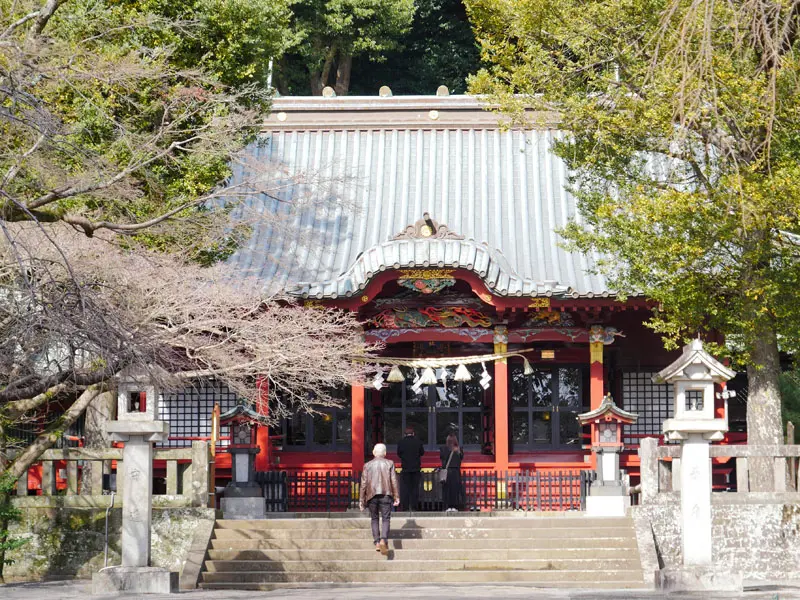
After visiting in person, I realized that although Hojo Masako’s love story is certainly moving, what attracted me most about this shrine was the legendary energy of the “red and white twin dragons.” The red dragon and white dragon symbolize the balance of yin and yang, fire and water, strength and gentleness. They are also important symbols of belief at Izusan Shrine and are seen as protectors of luck and energy.
So when I saw that there were two types of goshuin, one with a red dragon and one with a white dragon, I bought both without hesitation. I thought having double the good luck would not be a bad thing.
There was also an interesting design inside the shrine: looking for inome. Inome is a heart-shaped symbol that represents love and relationships. These symbols are cleverly hidden in different corners of the shrine. At first, I thought they would probably be hard to find, so I gave up on searching right away.
Unexpectedly, while taking photos, I happened to find one of them. Using that as a clue, I ended up finding all of the inome symbols in one go. I felt a great sense of achievement, and it also made me feel that my luck that day was really good.

The most important kosatsu nousho was also easy to find. It is located in front of the shrine office, on the right side when you face the main approach. The location is clear and easy to notice, so it is very convenient for visitors who want to return old omamori or ofuda.
There is also an offering box in front of it. You can put some coins inside as a small gesture of thanks to the shrine staff.

One thing to keep in mind is that if you plan to visit this shrine, you should be prepared for the steep slope. The road up is really quite steep. I had to walk up slowly in two stages. The scenery and atmosphere along the way were wonderful, but to be honest, the climb was also very tiring.

That said, the feeling this shrine gives is definitely worth the effort. The energy of the red and white twin dragons feels strong, and the whole shrine grounds carry a calm but firm sense of power. For people who want to pray for good luck or adjust their fortune, this is a very worthwhile spiritual spot to visit.
More notes from my visit to Izusan Shrine(Chinese only)…
Key Features
- Main Deities: Homusubi no Mikoto (火牟須比命/ほむすびのみこと) and Izu Okami
- History: Izusan Shrine has a history of more than 1,300 years and is one of the oldest shrines in Japan.
- Worship Style: First, purify your hands and mouth at the temizuya water basin. Then, pray in front of the worship hall using the standard shrine style: two bows, two claps, and one bow.
Basic Information
- Address: 708-1 Izusan, Atami City, Shizuoka Prefecture, Japan
- Access: About 10 minutes by bus from JR Atami Station, or about 30 minutes on foot.
- Official Websiteizusanjinjya.jp
Kinomiya Shrine / 来宮神社 / きのみやじんじゃ
Kinomiya Shrine was not originally on my must-visit list for this trip. That day, I planned to visit Atami Plum Garden first. If I went to Kinomiya Shrine after leaving the garden, the schedule would be a little tight. After all, Atami Plum Garden is quite large, and walking around it is not exactly easy. Since I also had to return to Tokyo in the evening, I had originally decided to skip the shrine.
However, when I saw a brochure for Kinomiya Shrine at the tourist information center, I felt that this shrine seemed to have a special atmosphere. Because of that, I started to hesitate.
Just when I was still unsure, something unexpected happened. I dropped and broke my camera lens. My mood sank immediately. I could not even feel excited about the plum blossoms at the garden anymore. While sitting there in shock and staring blankly because of my broken lens, I thought that instead of staying in the garden feeling upset, I should move to another place.
So I decided to go to Kinomiya Shrine. I thought that changing the place might also help change my luck. Otherwise, I felt like I would not be able to continue the rest of my itinerary.
Unexpectedly, as soon as I arrived at the shrine, I was surprised by the crowd in front of me. When I had checked photos online before, the shrine looked relaxed and peaceful. But on the day I visited, it was almost packed with people. There was even a line to pray at the main shrine building. Luckily, the line was not too long, and I did not have to wait very long before it was my turn.

What surprised me the most was the architectural style here, especially the shrine office. It completely changed my traditional image of what a shrine office should look like. At first glance, I almost thought it was a stylish high-end café in Omotesando. The whole building looked modern, polished, and very well designed, making me want to look at it a few more times.
At that time, I even thought it was a place selling drinks or souvenirs. I planned to buy a drink there and get some small change for drawing an omikuji. However, when I walked closer, I realized that it was actually the shrine office. The place that really sold food and drinks was next to it.

Because the overall building style is so different from a traditional shrine, and because the shrine was crowded with a tight flow of visitors, many people may accidentally miss some important facilities inside the shrine office. The kosatsu nousho is located on the right side of the shrine office entrance.
Its location is not exactly hidden, but if you do not pay attention, you may really miss it with just one turn. If you bring expired omamori or ofuda to return, I recommend checking this area as soon as you enter. Otherwise, you may be carried along by the crowd and miss it.
Speaking of the main highlight of Kinomiya Shrine, the thousand-year-old great camphor tree is something you cannot miss. After walking around to the back of the main shrine building, I could immediately feel an overwhelming energy that was different from other shrines. It was not just “impressive.” It felt more like a deep and steady life force.
It is said that walking around the sacred tree once can add one year to your life. Of course, I followed the custom and walked around it once. There is also an omikuji area in front of the tree. If you simply want to draw a small fortune for some encouragement, this is a nice place to stop for a moment and try your luck.

Maybe it was because the shrine itself had such strong energy, or maybe there were too many people for me to stay trapped in my low mood. Either way, the sadness I had felt after breaking my camera lens somehow did not fully surface here. Later, I also had a sweet I liked at Torii no Musubiha (鳥居の結び葉, a sweets shop near the shrine entrance), which helped lift my mood a little.
This sweets shop is operated by the shrine, and to my surprise, it sold grilled dango, one of my favorite snacks. I had eaten something similar before at Setagaya Boroichi (世田谷ボロ市, a traditional winter flea market in Setagaya, Tokyo), so I bought one skewer without hesitation. The moment I took a bite, the sweet citrus soy sauce and the warmth of the dango seemed to wrap around me completely. My mood finally started to relax.

What was even more interesting was that the omikuji I drew here turned out to be surprisingly accurate. In the travel luck section, it said, “If you want to go, just go. You will not lose anything.” I did not fully understand what it meant at the time, but I remembered this line clearly.
After arriving in Tokyo that day, it was already quite late. I was struggling with whether I should still go to Shinjuku to look for a solution for my broken lens. In the end, I decided to trust the message from the deity and made a special trip to Shinjuku. Although I could not find a shop that could repair the lens, I was able to buy a replacement at a reasonable price. Because of that, the rest of my trip could continue smoothly without regrets.
This visit began with the frustration of a broken lens, but because I came to Kinomiya Shrine, it eventually became an unexpected and precious journey of changing my luck. I am truly grateful for the protection of Itakeru no Okami.
More notes from my visit to Kinomiya Shrine (Chinese only)…
Key Features
- Main Deity: Itakeru no Mikoto (五十猛命/いそたけるのみこと)
- Background:
- The history of Kinomiya Shrine is said to date back to 710. According to legend, a fisherman once pulled a wooden statue from Atami Bay while fishing. The deity Itakeru no Mikoto then appeared and instructed that the statue be enshrined in a place with seven great camphor trees. This is said to be the origin of the shrine.
- Kinomiya Shrine is regarded as the guardian shrine of the Atami area and is also the head shrine of the 44 Kinomiya Shrines across Japan.
- Worship Style: First, purify your hands and mouth at the temizuya water basin. Then, pray in front of the worship hall using the standard shrine style: two bows, two claps, and one bow.
- Highlights:
- The shrine grounds have a sacred great camphor tree that is more than 2,100 years old. It is said that walking around the tree once can add one year to your life. It is also known as a spiritual power spot for health and wish fulfillment.
Basic Information
- Address: 43-1 Nishiyama-cho, Atami City, Shizuoka Prefecture
- Access: About a 3-minute walk from JR Kinomiya Station. Buses are also available, but they do not run very frequently, so it is better to check the timetable in advance.
- Official Website:kinomiya.or.jp
Aichi Prefecture
Besides the busy city center of Nagoya, the suburbs of Aichi Prefecture are also very attractive. In some ways, they may even be more interesting than the city itself. Although I stayed in the city center this time, my itinerary took me to the suburbs almost every day. The more I explored, the more I felt that this area was definitely worth visiting several more times. I originally thought two or three days would be enough for a quick look, but later realized that it was only the beginning.
Places such as Inuyama, Komaki, Okazaki, Toyota, and Seto all have rich natural scenery and many historical and cultural sites. The shrines and temples are especially interesting. I did not visit that many on this trip, but each one had its own style and story. Some have protected their local areas for hundreds of years. From the rise of warrior families to the blending of local folk beliefs, they carry deep cultural layers.
Because of this, if I visit Aichi again, I do not want to squeeze the trip into just a few days. I would rather leave enough time to slowly explore these places. The farther I go from the city center, the more I can feel the real character and depth of this prefecture. Whether it is a shrine, a temple, an old street, or a small local shop, each place seems to hold unexpected discoveries and warmth.
Ryusenji Temple / 龍泉寺 / 竜泉寺
The main reason I visited this temple was actually because of the cats. This place has long been known for having many cats, and it is a small spot that cat-loving travelers may make a special detour to visit.
Unfortunately, the day I visited was cold and snowy. The whole temple was so quiet that it felt as if it were hibernating. The cats, which are said to usually relax on the stone steps or in sunny corners, were mostly hiding somewhere warm. Only one or two cats occasionally peeked out from the corners, as if they were still deciding whether to come out and greet visitors.

That day also happened to be during a long holiday in Japan, so the temple staff were off as well. The whole temple grounds felt especially quiet. There was only the sound of falling snow and the occasional footsteps of a few visitors. It created a peaceful feeling, far away from the noise of daily life.
I slowly walked around the temple grounds. Although I did not meet many cats, the quiet atmosphere still helped calm my mind.
The only pity was that this temple originally has a treasure hall. It is said to hold many important Buddhist items and local historical materials. However, it is only open on Sundays. Since I visited on a Saturday, I missed the opening time. I could only look at the building from outside. It looked quite impressive, so that was a little unfortunate.


As for the most important part, the kosatsu nousho is not located near the main hall or worship hall. Instead, it is placed in a corner beside the bell tower. It is not very eye-catching, but if you walk around the bell tower, you should be able to find it.
What moved me most was that although Ryusenji is a Buddhist temple, its kosatsu nousho clearly states that it accepts amulets and omamori from shrines. This kind of open return box is relatively rare. It does not only accept omamori and ofuda from its own temple, but is also willing to receive omamori from shrines.
For someone like me, who often visits different regions and may have several protective charms from different places, this arrangement is both thoughtful and very practical.

Later, after looking up more information, I learned that this is not that uncommon in Japan. This is especially true for old temples that have long played an important role in local belief. Sometimes, out of compassion or for the convenience of worshippers, they may accept returned items from shrines as well.
As long as there is no clear sign saying “only items from this temple” or “shrine items are not accepted,” it can usually be understood as acceptable. However, this kind of open policy is not used by every temple, so you should not simply put things inside without checking. Always read the notice first.
Although I did not get to see many cats, and I also missed the chance to visit the treasure hall, this snowy temple visit unexpectedly gave me a quiet and deep sense of peace. In its own way, it became another kind of meaningful travel memory.

More About My Visit and Praying Experience (Chinese only)
Key Features
- Official Name: Shotozan Daigyoin Ryusenji Temple
- Sect: Tendai Buddhism
- Main Deity: Bato Kannon
- Background:
- According to legend, when Saicho, also known as Dengyo Daishi, visited Atsuta Jingu during the Enryaku period in the late 8th century, he received a message from a dragon deity. While chanting sutras by a pond, Bato Kannon appeared, and this led to the founding of the temple.
- Another legend says that Kukai, also known as Kobo Daishi, buried three of the eight sacred swords of Atsuta Jingu at this site. Because of this, Ryusenji came to be regarded as the inner sanctuary of Atsuta Jingu.
- Ryusenji is also located in a strategic area. During the Sengoku period, Oda Nobuyuki built a castle here, and during the Battle of Komaki and Nagakute, it became one of Hashiba Hideyoshi’s military positions.
- Worship Style: Since this is a Buddhist temple, visitors pray with their hands together. There is no need to clap.
Basic Information
- Basic Information
- Address: 1-902 Ryusenji, Moriyama Ward, Nagoya City, Aichi Prefecture
- Access: Take a Nagoya City Bus to Ryusenji bus stop. From there, it is about a 3-minute walk. However, since the road goes uphill, the actual feeling may be closer to twice that time.
- Parking: Available. Driving here is also a good option and may be more convenient.
- Official Website: ryusenji.com
- The temple’s cats are very popular, so the temple has also created a special webpage for them. If you are interested, remember to check it here: Link
Japanese Shrine Notes Part 2 is here.(Chinese only)
*Unless otherwise noted, all photos in this article were taken by the author (yanshoto.com/en/) during personal travels and are fully copyrighted. Please do not reproduce or use them for commercial purposes without prior permission. Thank you for your understanding and respect.