

- 春日的東京和菓子老舖巡禮:走訪 5+1 家名店,從製作延伸至品嚐的味覺見學 - 2026-05-04
- 東京南千住素盞雄神社散步記,從地圖偶然發現的雛人形與桃花神社 - 2026-04-27
- Hostinger 主機內搬家踩雷實錄:以為帳號轉移就是塊小蛋糕,結果遇到網域綁定的大魔王 - 2026-04-23
澄
如果你需要中文版,可以在這裡找到,歡迎點擊閱讀。
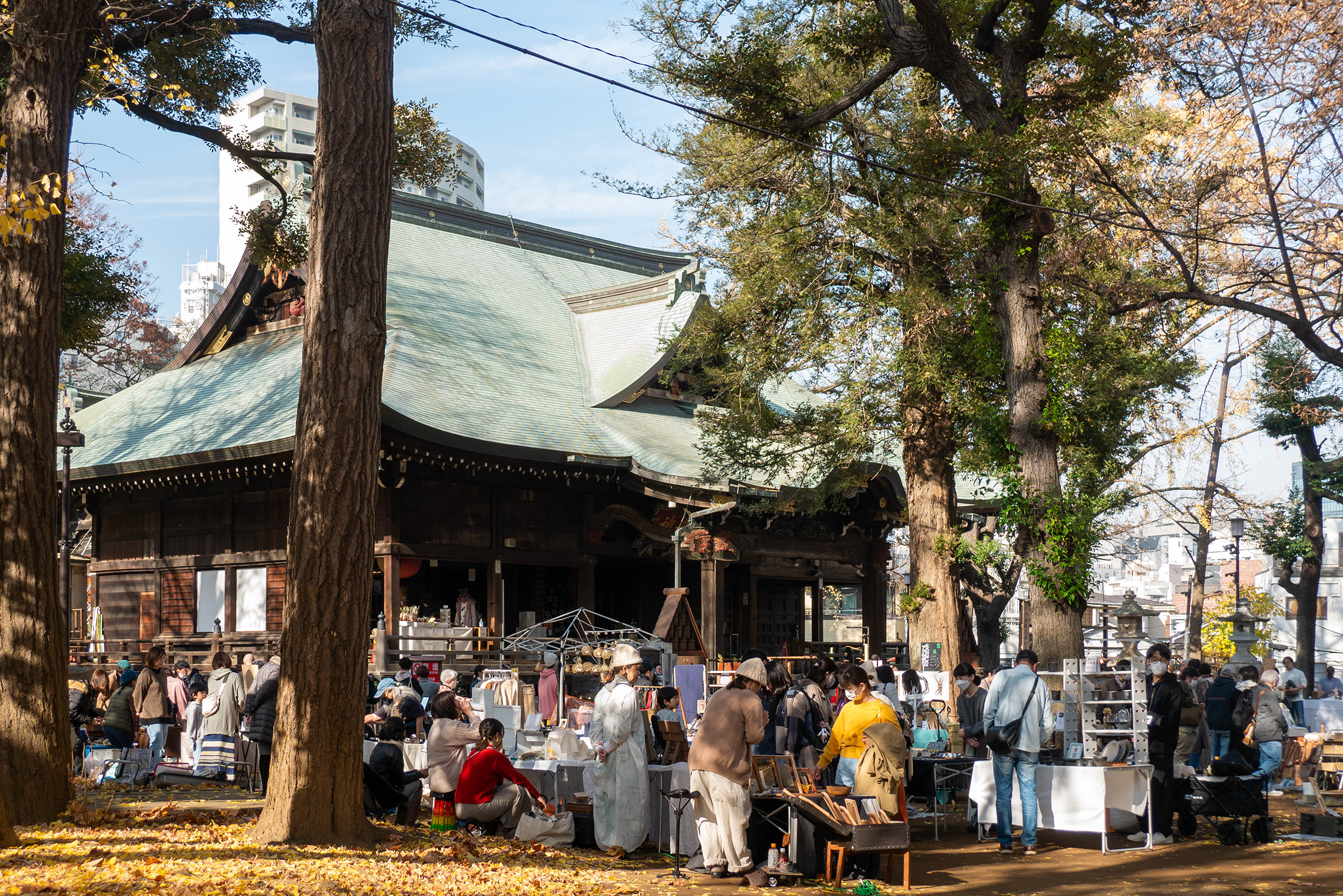
In the previous article, I introduced the essentials of the Zōshigaya Handmade Market, from its thousand-year-old ginkgo tree to the limited-edition grilled dango. Now, it’s finally time to explore the heart of the market itself. Although there are numerous stalls, the walkways remain wide and spacious, creating a relaxed browsing experience where every booth radiates its own distinct charm. Vendors were incredibly open to photography, and you could see the immense care put into their displays—some felt less like stalls and more like individual works of art. I found myself walking past the main hall four or five times, discovering something new with every loop.
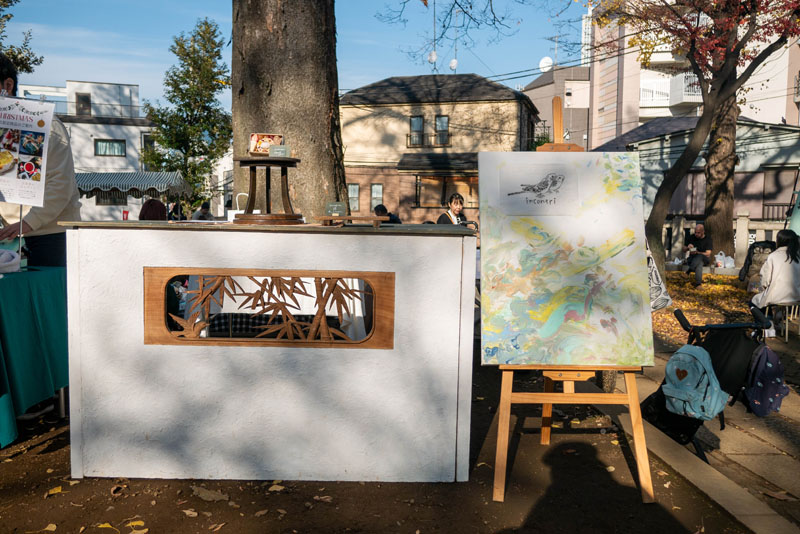
Some popular stalls sold out remarkably early; for instance, “inconeri” was already empty when I arrived around noon, despite the market starting at 10 a.m. Even with their products gone, they kept their beautifully designed booth—featuring elegant wooden lattice windows—on display. I later learned they specialize in rice crackers packaged in exquisite tin boxes, which explains the morning rush.
Beyond the crafts, the market committee frequently hosts seasonal workshops and tastings. I was particularly sad to miss the Christmas Stollen and coffee tasting event. Looking back at the official website, I realized they often organize themed sessions, such as kintsugi (golden joinery) workshops, reflecting the organizers’ deep dedication to craft culture. I highly recommend checking their schedule in advance and arriving early, as these sessions are clearly highly sought after.
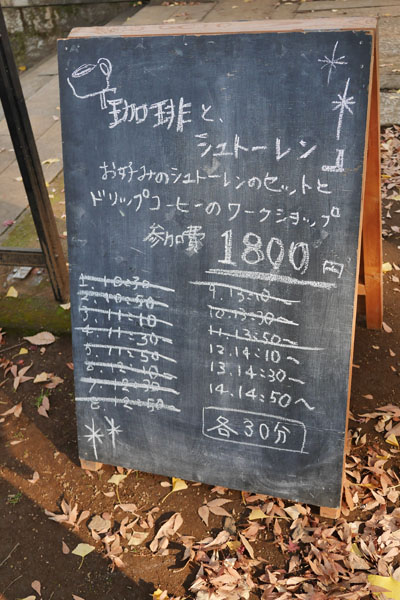
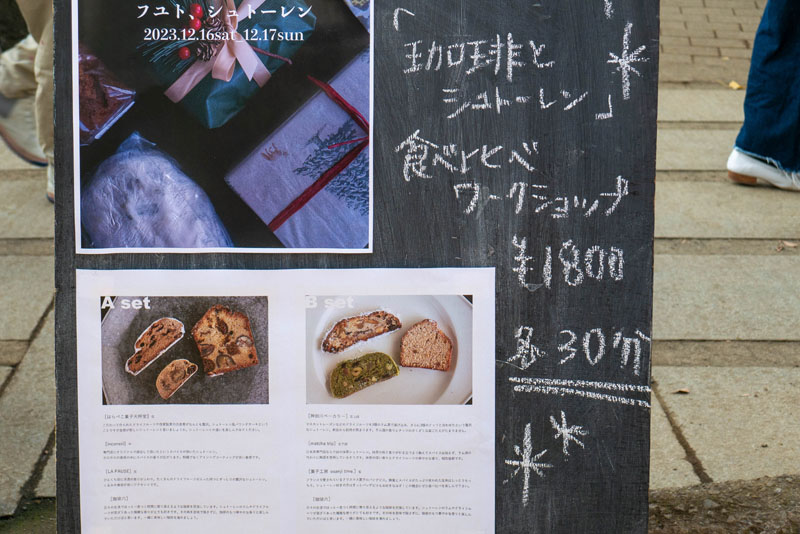
The Stollen event I missed would have allowed participants to compare different varieties paired with coffee and learn from the bakers themselves. This memory came back to me later during a course at the Tokyo College of Confectionery, when a Western pastry teacher gave us a taste of their handmade Stollen. Had I joined the market event, I might have better understood why my classmate insisted it was the best Stollen she had ever tasted.
- Every Booth Worth a Pause — Like Strolling Through a Gallery
- A Serendipitous Encounter with a Glass Cat — Fragile in Looks, Not in Form
- The Fated Ceramic Plate — Perfect for Holding a Delicate Wagashi
- Impressions from the Ōtori Shrine Market — A Purification Ritual to End the Year
- Conclusion – Gathering Heartfelt Moments at the Market, Where Every Material Tells Its Own Tale
Every Booth Worth a Pause — Like Strolling Through a Gallery
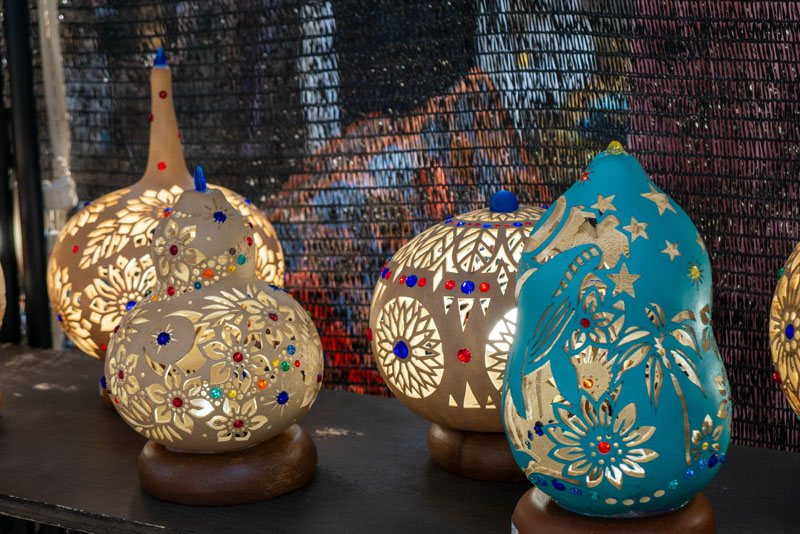
The most memorable highlight of the Zōshigaya Market was undoubtedly the gourd-carved lampshades by Happy Bright Studio. Their delicate perforated patterns created a stained-glass effect, casting soft floral and leaf shadows that were truly mesmerizing.
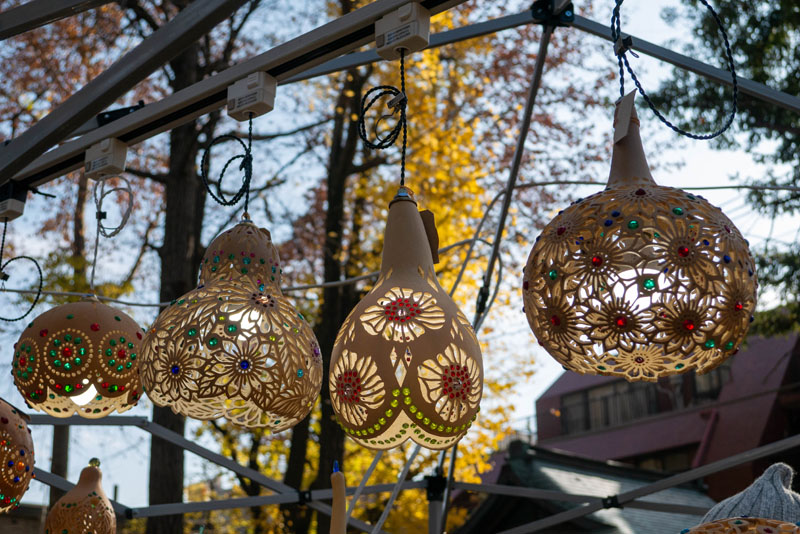
To capture their beauty, I lowered my camera’s exposure to let the inner glow pop against the golden ginkgo trees, creating a uniquely magical moment. The artist had even thoughtfully set up natural-material shades around the stall to minimize glare, demonstrating a meticulous dedication to their handmade aesthetic even in broad daylight.
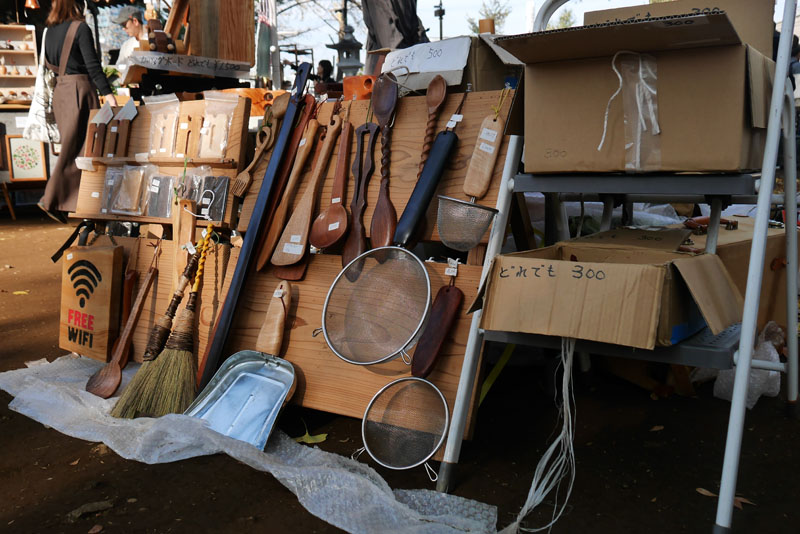
While many showcased their masterpieces, wandering slowly led me to charming discoveries made from scrap materials. Near the gourd lamps, a stall selling wooden utensils caught my eye; tucked away at the bottom was a casually crafted wooden butter spreader—a simple, honest piece offered at an incredibly friendly price.
I also encountered a brand called minne, featuring ceramic lampshades adorned with whimsical, childlike drawings.
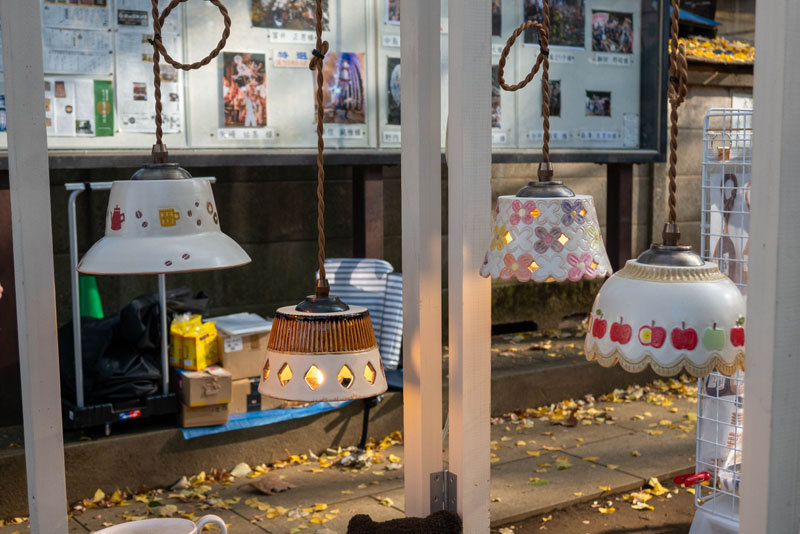
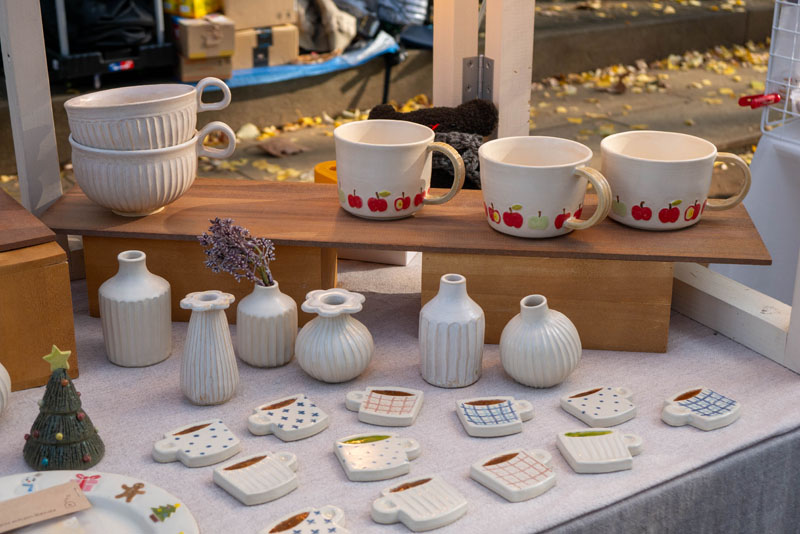
Their pieces, often decorated with festive Christmas motifs and tiny apples in a gentle, “foggy” finish, seemed perfect for adding a sense of ceremony to a rustic home.
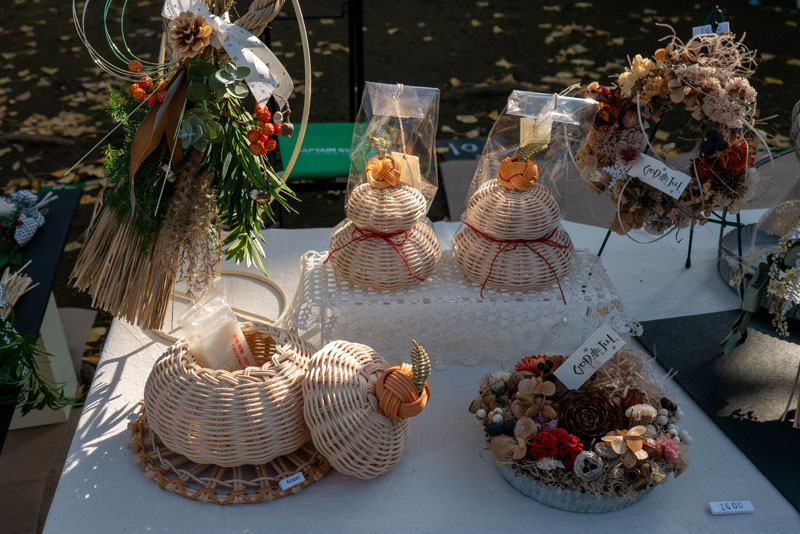
One of the cleverest ideas came from Craft Studio YUKARI, who wove traditional New Year’s kagami mochi from rattan. This brilliant design solved the issue of wasted or dried-out mochi while doubling as a small storage box. I had to pass by several times before finally meeting the vendor to capture this special memory.
A Serendipitous Encounter with a Glass Cat — Fragile in Looks, Not in Form
However, the purchase that surprised me most was a cat charm from Fairy gatto.
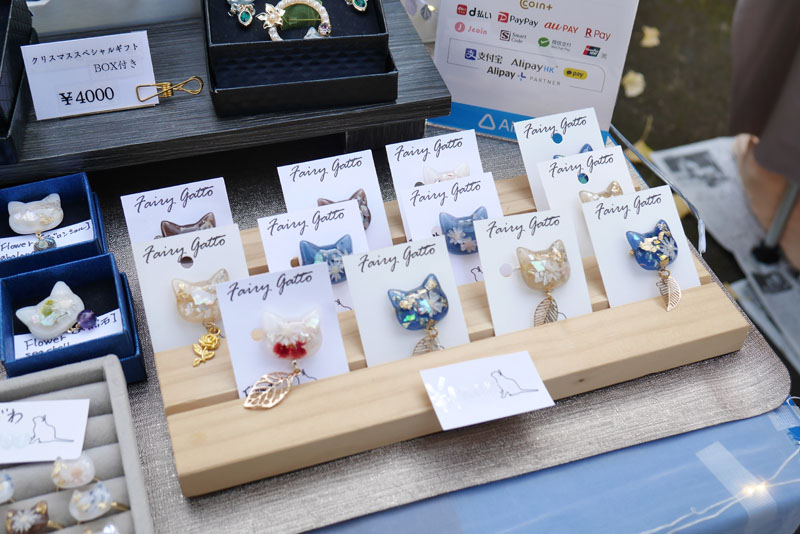
Initially, I mistook it for fragile glass or crystal and walked past, but upon returning to find a gift for a friend, I realized it was actually expertly crafted plastic.
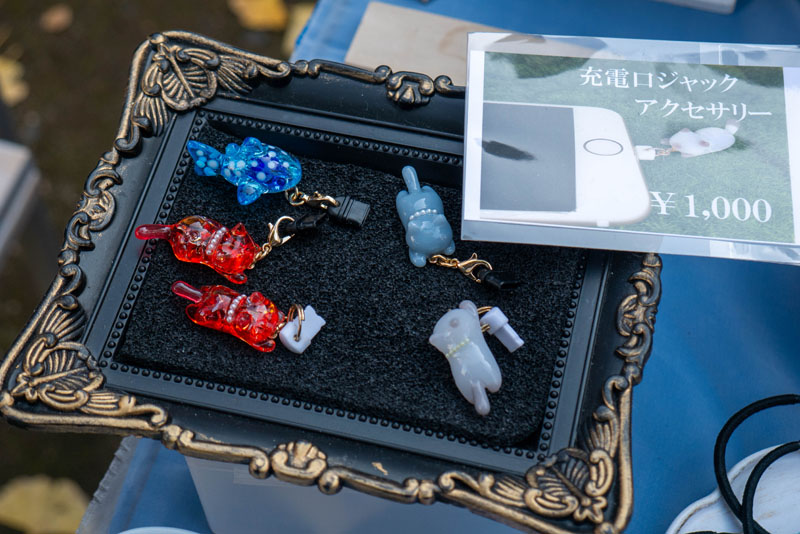
Its shine was so convincing that I ended up buying two—one for a friend and a tuxedo cat for myself. I especially appreciated the vendor’s preparedness, as they quickly provided an Android-compatible version when they saw my phone.
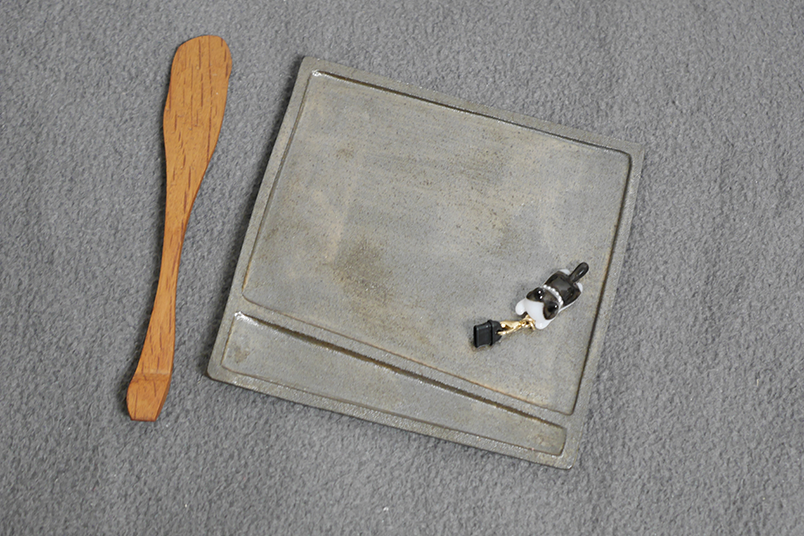
The wooden butter spreader and the ceramic plate shown later were also purchased at this market.
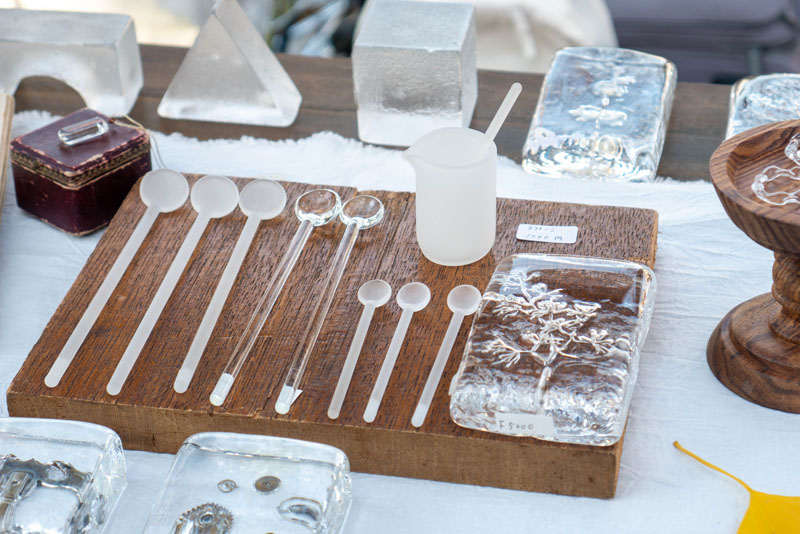
I also found myself lingering over Maki Furuta’s beautiful frosted glassware, particularly a tiny measuring cup and stirring spoon set. Although my logic eventually kicked in—the cup was perhaps only practical for espresso and too fragile for travel—the image of those translucent pieces encasing pressed plants remains a stunning memory of the day.
Near the temple hall, I was momentarily startled by a design that resembled a Formosan black bear, though it turned out to be an Asiatic black bear.
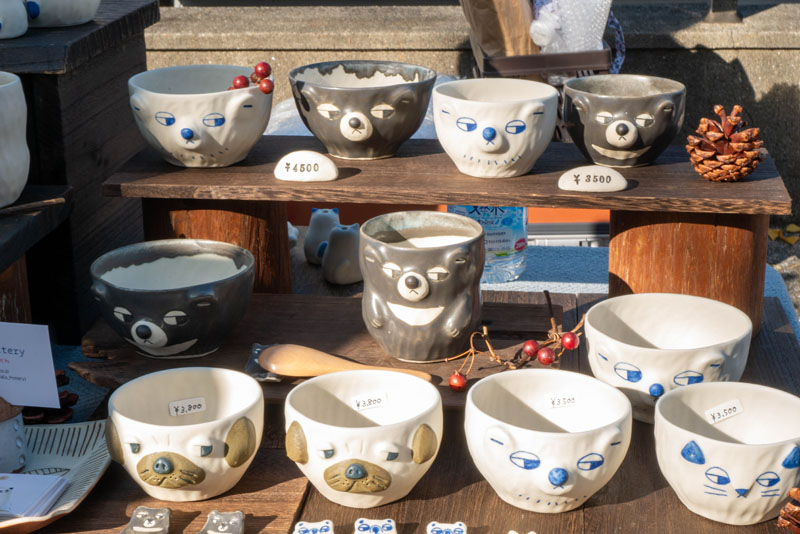
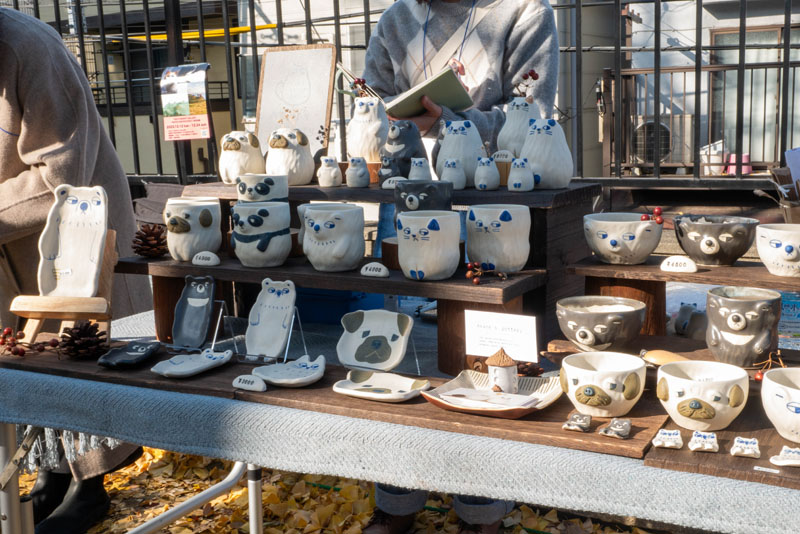
These striking pieces from AKANE’s Pottery left a lasting impression; each animal, from the aloof calico cat vase to the personality-filled polar bear mugs, was captured with remarkable character.
The Fated Ceramic Plate — Perfect for Holding a Delicate Wagashi
The most unexpected surprise of the market was finally finding a wagashi plate I truly loved. I had been searching for the perfect piece to showcase my own creations or to photograph seasonal sweets, even traveling to Yingge—Taiwan’s ceramics hub—and the Setagaya market in Tokyo, yet nothing had clicked. I was beginning to think I’d have to travel as far as Kyoto or Osaka, so finding the ideal plate here felt like a stroke of luck.
The black plate from やなさん工房 (Yanasan Studio) is versatile enough for both Japanese and Western desserts, but it feels tailor-made for jo-namagashi (high-grade wagashi). Since these sweets often feature delicate, light colors, the plate’s dark tone and subtle gold sheen provide a sophisticated contrast that enhances their visual appeal.
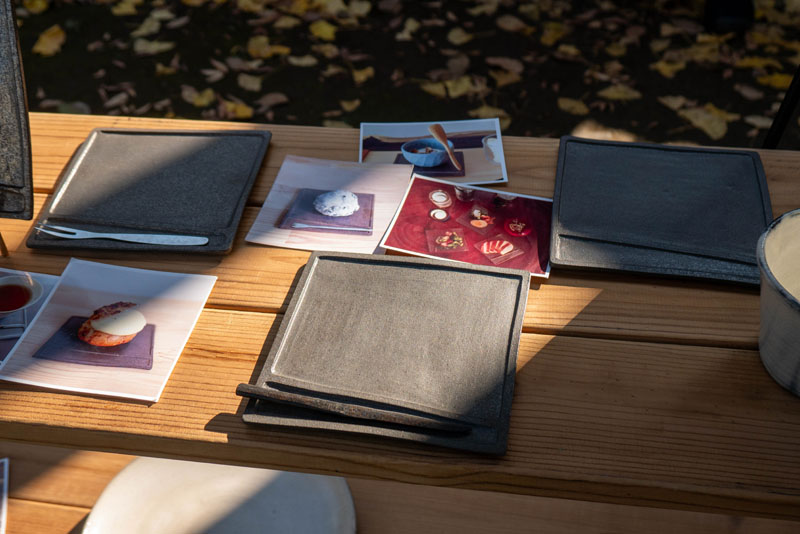
I even coveted the decorative fork used in their display; unfortunately, it wasn’t for sale. Had it been available, its non-metal material would have made it a perfect, travel-friendly carry-on. While they offered various shapes—including rectangular plates ideal for Western pastries—I reluctantly held back, fearing a full matching set might feel too uniform.
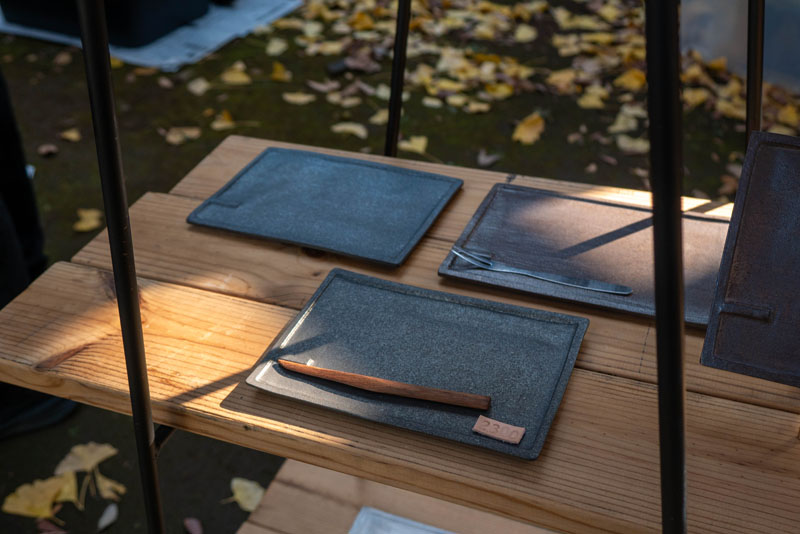
I also deeply regret passing on their beautiful matcha bowl; its black base would have made the vibrant green of the tea pop, offering a more casual, approachable alternative to formal Tenmoku ware.
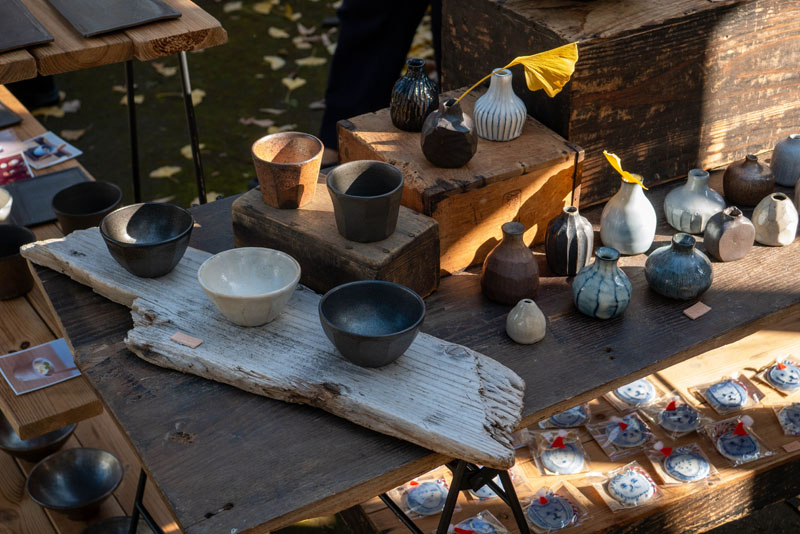
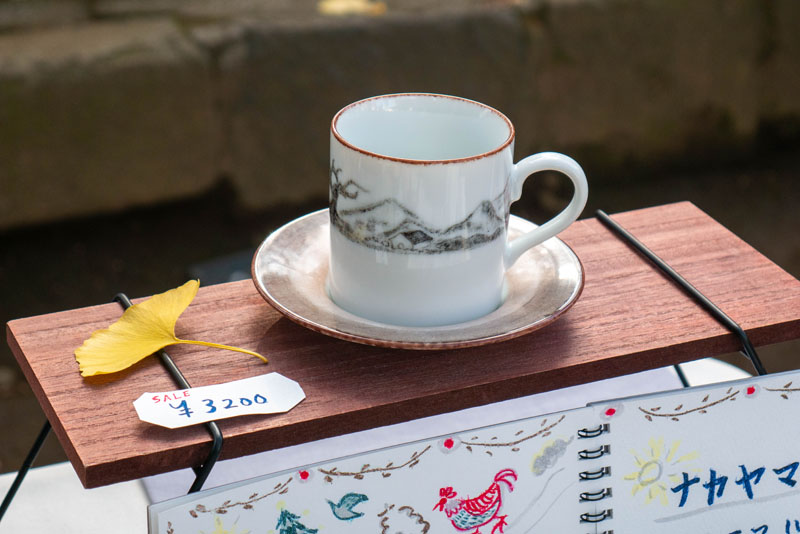
Another booth that captivated me was アトリエ西七丁目 (Atelier Nishi 7-chome). Their ceramic glazes resembled watercolor paintings, with a slight unevenness that evoked the nostalgic charm of vintage printmaking.
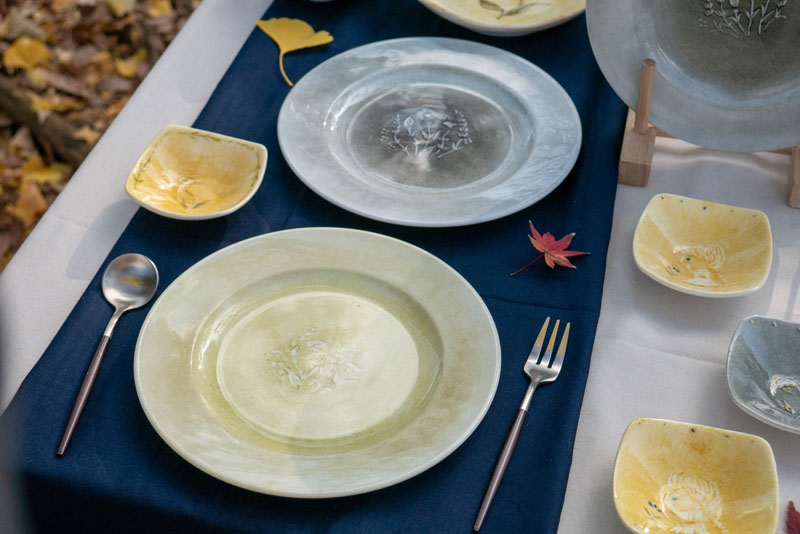
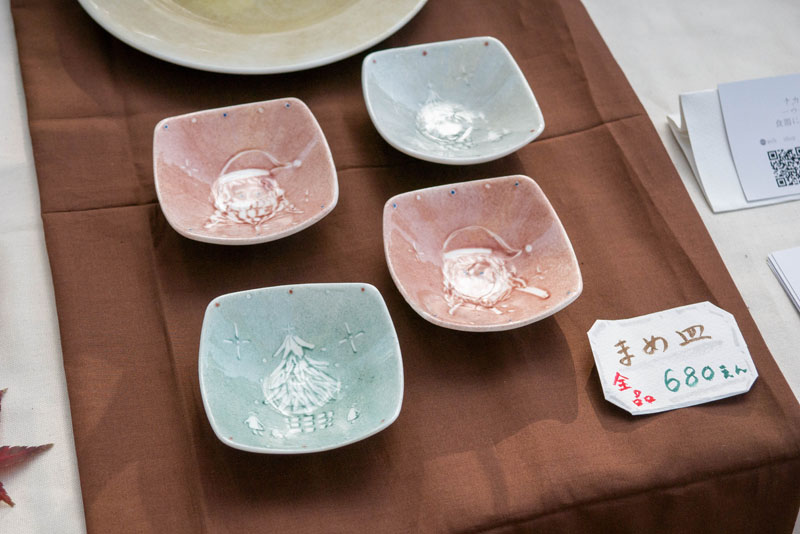
Their cups were equally unique, featuring designs that looked like charcoal sketches transferred onto clay—a style I rarely encounter in Taiwan. Although I was tempted, the strong Christmas motifs felt a bit too seasonal for year-round use, and my logic reminded me that a solo dweller can only use so many cups.
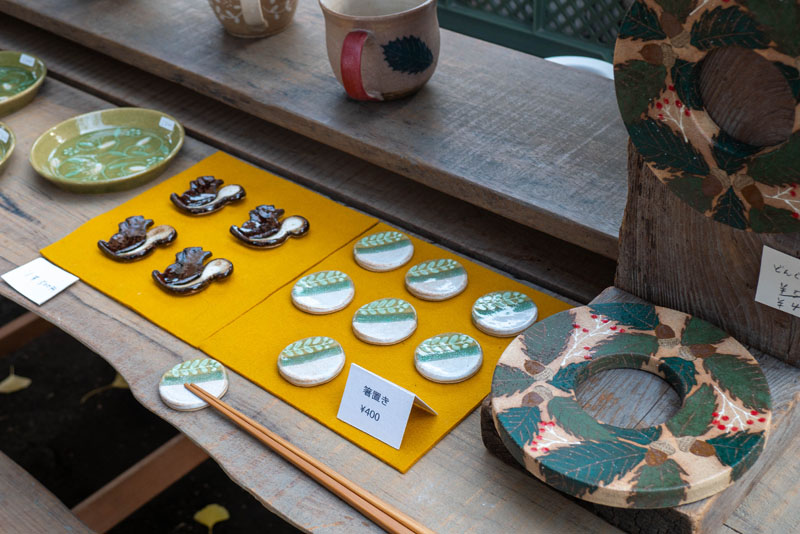
Despite my restraint at the previous booth, the holiday season brought out incredible creativity elsewhere. satoko otaki, for instance, crafted an entire wreath out of ceramics—a level of originality that left me seriously impressed. Their squirrel chopstick rests were full of character, and their deep green plates with intricate patterns exuded a medieval European elegance. Ultimately, the diversity and conceptual depth of the ceramic artists at the Zōshigaya Market far exceeded my expectations. This visit was more than just a shopping trip; it was a profoundly inspiring experience that left me feeling incredibly lucky.
Impressions from the Ōtori Shrine Market — A Purification Ritual to End the Year
On my way from Kishimojin Temple to Otori Shrine, I felt no need for Google Maps; the two sites are so close that following the hand-drawn local maps or simply walking straight ahead made navigation effortless.
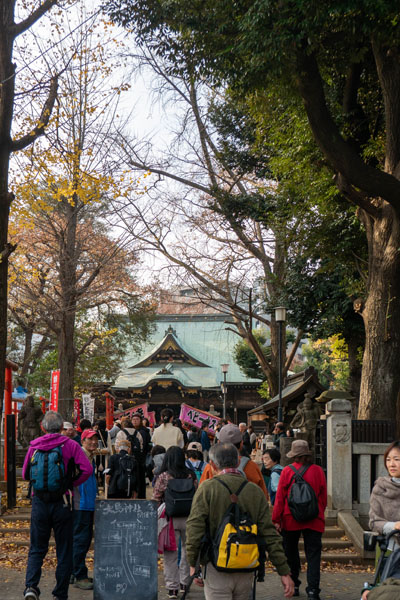
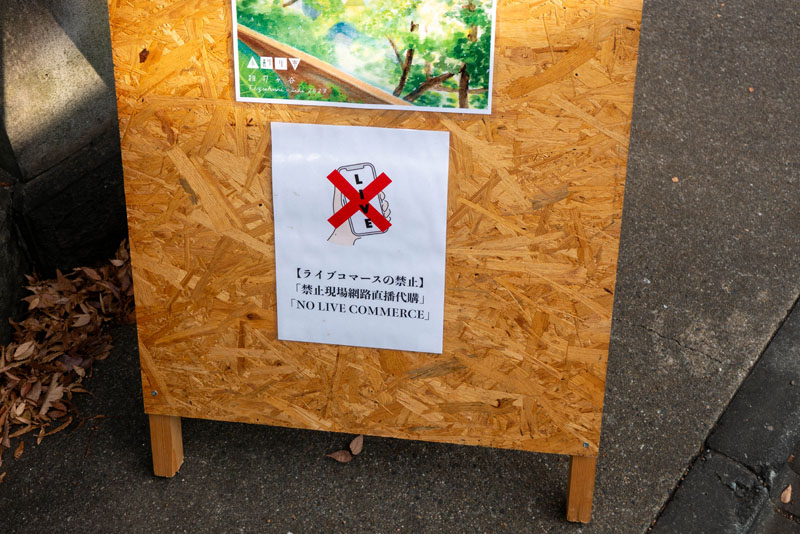
Upon arrival, two things immediately caught my attention. First was a sign near the side entrance that read, “No livestream shopping, please.” It was a bit of a shock to realize that the influence of live commerce has reached even these quiet handmade markets, seemingly causing enough disruption to prompt such a firm boundary.
The second surprise was finding a large ring of grass called a “Chinowa” for the “Great Purification Ritual” (Toshikoshi Oharae). This sacred ring, made of kaya grass, is part of a traditional ritual believed to cleanse impurities and misfortunes. Walking through the ring in a figure-eight pattern is known as “Chinowa Kuguri.” I didn’t expect to see it already in mid-December—usually, these are only set up closer to the end of the year—but I was happy to stumble upon it.I quickly looked up the correct way to walk through it. The last time I participated was during summer in Kyoto at Kitano Tenmangu Shrine, and I had forgotten the details.
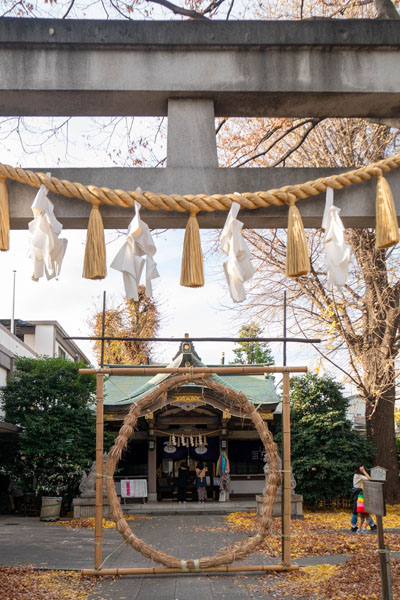
The traditional figure-eight ritual has four steps:
- Walk through the ring from the front and loop to the left.
- Walk through again and loop to the right.
- A third time through, loop left once more.
- Finally, walk straight out through the front exit.
This symbolic walk in the shape of an “8” represents purification and welcoming a new, healthy year. It’s a beautiful, meaningful tradition, and if you ever encounter a Chinowa, I highly recommend giving it a try, and if you ever encounter a Chinowa, I highly recommend giving it a try.
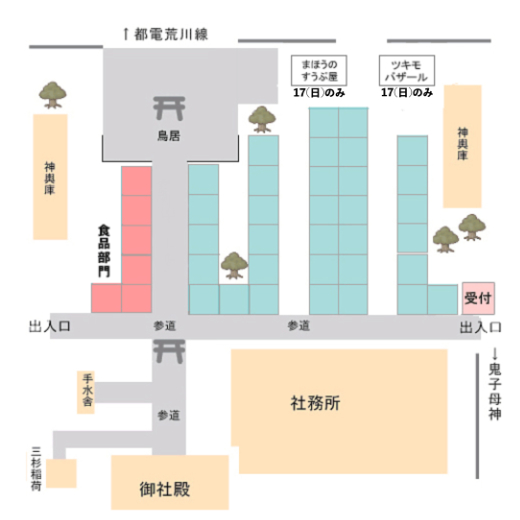
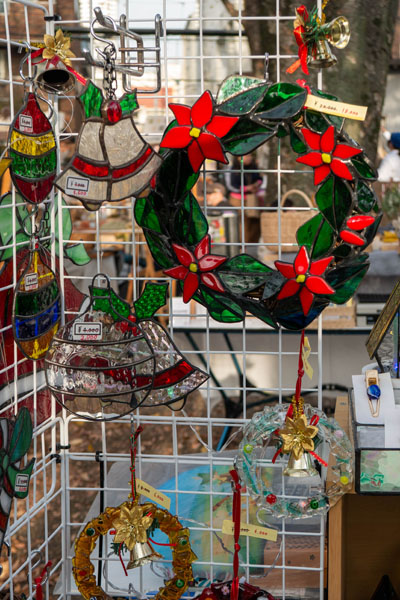
Otori Shrine’s grounds are smaller than Kishimojin’s, resulting in fewer vendors but a more spacious feel with many stalls focusing on floral arrangements. Some shopkeepers seemed reluctant to be photographed—possibly due to past issues—but thankfully, the ones I liked were kind enough to grant me permission. One standout was “Stained Glass La Famille,” featuring Christmas wreaths made with stained glass—a creative medium I had never seen used this way before. Their work even includes hands-on workshops, which was very tempting.
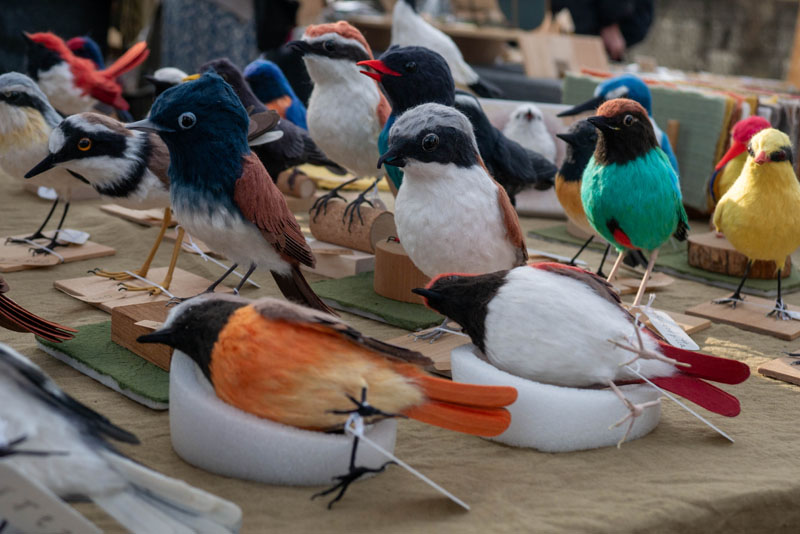
Another memorable booth was “Yamadooi Kobo,” a studio selling hand-crafted bird figurines. I had seen their works online while researching the market and was already impressed, but the real items were even more lifelike and detailed. Each bird looked full of spirit and carefully crafted. Seeing them in person made me finally understand why bird photography is such a beloved and dedicated niche.
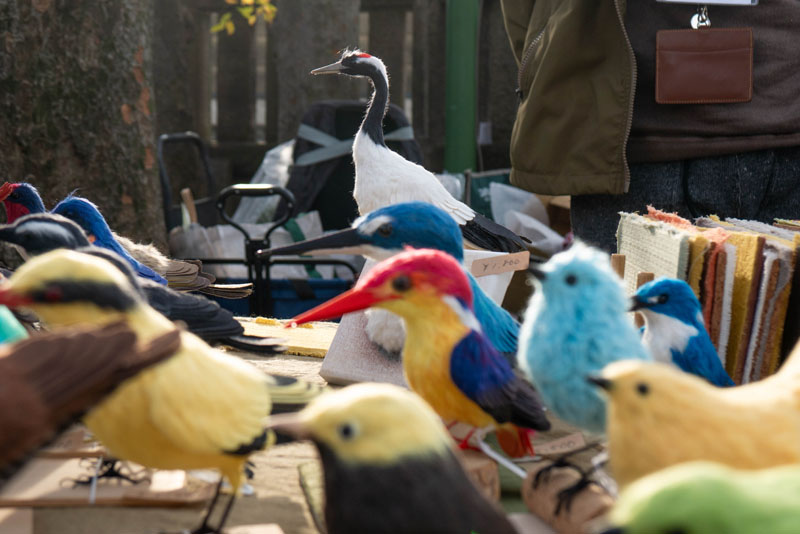
Each bird looked full of spirit and carefully crafted. Seeing them in person made me finally understand why bird photography is such a beloved and dedicated niche.
Conclusion – Gathering Heartfelt Moments at the Market, Where Every Material Tells Its Own Tale
After walking through the entire market, I was genuinely impressed by how carefully the organizers curated both the atmosphere and the quality. There were no booths that felt out of place; everything was truly handmade. The selected vendors each possessed a distinct creative style and aesthetic sense, offering an amazing variety that spanned leather, fabric, ceramics, and woodwork, as well as works that combined glass, metal, and natural materials in innovative ways. Even when similar media were used, each brand expressed its own unique artistic language, ensuring there was no repetition or templated design. Browsing the market felt layered and full of discovery.
What amazed me even more was how thoughtfully each vendor decorated their booth, with some even resembling small-scale art exhibitions. From the product layout to the visual branding, everything was so well considered that one could feel the creator’s pure passion and love just by stopping to look.
The most delightful surprise was finding a ceramic plate I instantly fell in love with. I had initially thought such unique pieces could only be found at secondhand markets, but this handmade market proved me wrong. The texture and glaze had such personality that I could sense the artist’s spirit within the work. There were many other ceramic pieces as well, each with a different vibe—some quiet, some bold—completely breaking my past stereotypes of what ceramics could be.
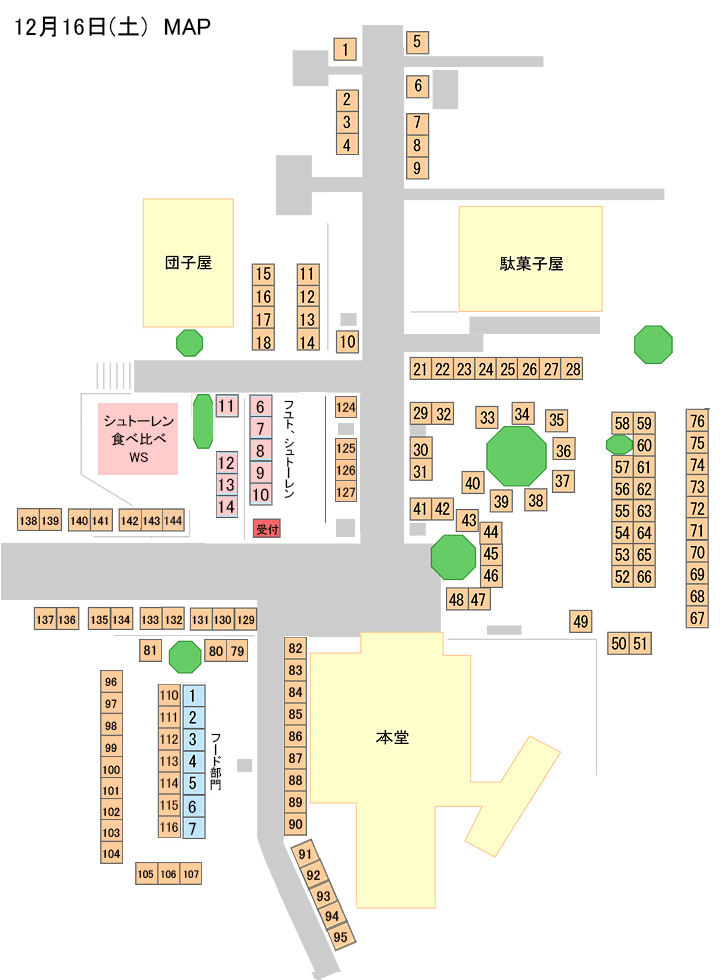
There was also a special themed area organized by the host called “Fuyuto, Stollen,” featuring a Christmas bread exhibition and tasting. It brought together several artisan bakeries offering handmade holiday breads, along with a two-day-only mini workshop. Although I didn’t get to join the event, just seeing the display was enough to feel the incredible attention to detail. It proved once again that this market wasn’t just about selling products; it was about bringing the beauty of handmade living into a tangible, shareable experience.
Next time, I’ll make sure to check the official website ahead of time for any themed events and plan my route accordingly. I truly regret missing the Christmas stollen tasting this time, but after checking their site, I found that the organizers regularly host themed editions—whether seasonal, material-based, or style-focused. Each event has a clear curatorial direction and thoughtful selection. A market like this deserves more than one visit, and I hope to join the hands-on activities next time and perhaps find another ceramic piece that speaks to me.
List of Featured Creators in This Market
| Booth Name | Type of Work | Instagram Link | Official Website & Shop Link |
|---|---|---|---|
| inconeri | Tin Box Cookies | @_inconeri_ | inconeri.base.shop |
| Happy Bright 工房 | Gourd Lamps and Miscellaneous Goods | @happy.bright.koubou | hbk.handcrafted.jp |
| minne | Pottery | @ceramiki0311 | minne.com/ceramiki0311 |
| クラフト工房ユーカリ | Wickerwork | @eucaly4050 | craftkobo-eucaly.jp |
| Fairy gatto 🐾 | Cat-themed Goods and Accessories | @fairy_gatto_accessories | creema.jp/c/fairyglow/item/onsale |
| Maki Furuta | Glassware | @makifuruta | glass-plus.jp/index.html |
| AKANE’s Pottery (大和田 あかね) | Animal-shaped Ceramics | @akanes_pottery | jp.pinkoi.com/store/akanes-pottery |
| やなさん工房(873works) | Pottery | @873_works | 873works.tokyo |
| アトリエ西七丁目 | Pottery | @nishi_7chome | nycoffeecup.base.shop |
| satoko otaki | Pottery | @hanatsuyu12 | creema.jp/c/hanatsuyu |
| ステンドグラス ラ・ファミーユ | Stained Glass | @lafamilleglass | lafamille.ciao.jp/ |
| やまどぅい工房 | Realistic Bird Figurines | @yuntaku16bird |
*Unless otherwise noted, all photos in this article were taken by the author (yanshoto.com) during personal travels and are fully copyrighted. Please do not reproduce or use them for commercial purposes without prior permission. Thank you for your understanding and respect.
Nearby Accommodation Experiences (This link leads to a page written in Chinese only.)
- Staying Solo at Juyoh Hotel: A Japanese-Style Single Room and a Convenient Tokyo Base Starting from Minami-Senju Station
- Staying Solo at Hotel Accela: A Convenient Location near Minami-Senju Station, with Skytree Views from the Women-Only Floor and a Surprise Encounter with the Sanja Matsuri at Asakusa Shrine
Related Market Articles (This link leads to a page written in Chinese only.)
- Aozora Market at Tokyo’s Hanazono Shrine: A Morning Stroll Through Antiques on a Carpet of Ginkgo Leaves
- An Evening Stroll at the Toshi-no-Ichi in Asakusa, Tokyo: Experiencing the Year-End Atmosphere of Edo Traditions
- Exploring the Setagaya Boro-ichi in Tokyo: A Winter Tradition Held Only Twice a Year and Designated as an Intangible Folk Cultural Property of Tokyo
- Zoshigaya Handmade Market & Otori Shrine Visit (Part 1): A Winter Afternoon of Temple Markets, Dango Tasting, and a Visit to Yumeji’s Grave
- Zoshigaya Handmade Market & Otori Shrine Visit (Part 2): Year-End Prayers Among Ceramics and Winter Sunlight at a Local Shinto Shrine
✦ 喜歡這篇文章嗎?
《煙雲漫筆》的每月慢信會收錄這樣的片段,也會分享一些未公開的草稿與旅行筆記。
如果你也想一起閱讀,歡迎留下信箱。